All posts by musingsofanaspie

What’s Your Function?

Nonfunctional. This word drives me nuts.

I’ve seen it used to describe autistic behavior in the context of “nonfunctional routines” and “nonfunctional play.”

Raise your hand if you think your routines are “nonfunctional.” I will happily concede that my routines are inflexible and specific, even weird and inexplicable at times, but nonfunctional? No way.

My routines have purpose. Without them, I risk becoming paralyzed or adrift. My carefully organized life goes all to hell. The plants don’t get watered. The dog may or may not get fed. I forget to shower. I get anxious about what’s for lunch before I’ve even finished breakfast. I spend too many hours happily chasing after this idea or that, forgetting that the rest of the world exists.

In the absence of routines, I just plain forget to do things. I drift. I perseverate and spend way too much energy on the blizzard of little choices that typical people find effortless and aspies find exhausting, never getting around to the more important stuff. I become all details and no big picture.

Take breakfast, for example. I find it fascinating that some people (a lot people?) wake up not knowing what they’ll have for breakfast. Presumably they walk into the kitchen or the diner or 7-11 and just decide on the spot what they’d like. This is an amazing feat of executive function and one that I would find stressful beyond words.

I eat the same thing for breakfast everyday. It frees me from having to think about what I’m in the mood for in the context of what we have in the house, the comparative calories and nutritional value of my choices, how much time it would to prepare each choice, the possibility that I’ve left some better choice off my list not to mention the fact that I’d have to shop for these choices at some point, thereby having to choose not once but twice.

Instead, I grab a bowl, slice up some fruit, dump in my favorite cereal and pour milk over it. It’s simple and it makes me happy and I don’t have to use up precious brain resources before the sun is barely over the horizon. That seems pretty damn functional to me.

Routines give my life structure. Within my routine, I always know what I need to do next or I at least have a limited number of “preprogrammed choices” to pick from. While this doesn’t entirely prevent unwanted surprises, it reduces them to a tolerable level.

If you’re not thinking “yes, exactly!” at this point, you’re probably thinking I’m the most boring rigid monotonous person in the history of humankind.

Fear not, I can be flexible if I have to. Let’s stay with the breakfast example. There are times when breakfast at home isn’t an option. Vacations. Special occasions. Power outages. This used to upset me, but I’ve learned that being grumpy at breakfast when there are so many delicious things to choose from is not only an example of a nonfunctional attachment to routine but a real drag.

At first I had to do the adult equivalent of a social story: Sometimes the restaurant doesn’t have the food I want to eat. That’s okay. There are a lot of other foods on the menu that I can try. Many of them are probably things that I would enjoy.
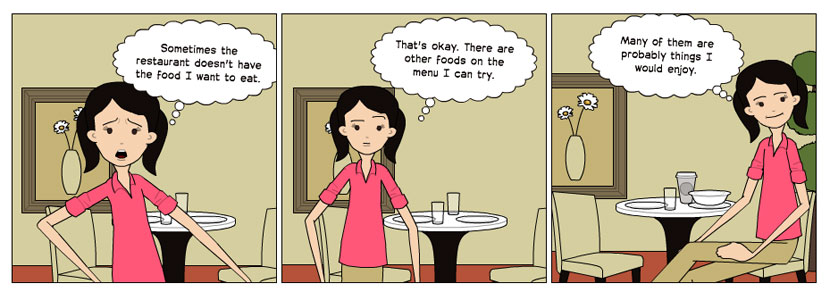
(That doesn't look like me at all but I have zero drawing skills so I had to rely on the stock characters at Pixton for an assist)
(That doesn’t look like me at all but I have zero drawing skills so I had to rely on the stock characters at Pixton for an assist)

Yes, I felt a bit odd having to repeat this to myself, but over time it worked.

Which isn’t to say that I’m routine-free on these magical breakfasts away from home. I can be happy with coffee if the restaurant doesn’t have chai. I can enjoy French toast as much as an egg sandwich or a bowl of oatmeal.

You won’t catch me spontaneously ordering a mango smoothie or freestyling my way through the make-your-own-omelet choices. I still have a routine for breakfast; it’s just different.

I’ve discovered that it’s not routines themselves that are problematic, it’s the appropriateness of the routine I choose to run. At home, I need to run the home breakfast routine; when I’m out, I need to run the restaurant breakfast routine. The restaurant breakfast routine has more options. It’s not one that I’d want to run everyday, but I can do it as needed without the kind of negative consequences I’d face if I had no routine at all.

What does no routine at all look like?

The Scientist and I went to a new lunch place last week. First of all, it was one of his totally unplanned let’s be spontaneous adventures so I was already a bit flustered by the last-minuteness of it all. The menu was blessedly limited, except for the all-day breakfast option, which I considered then eliminated on principle, although I’m still wondering even as I type this if I should have factored the breakfast items into my decision.

Anyhow, I ended up choosing a grilled ham and cheese but not before I’d analyzed the pros and cons of everything on the menu that I’d even remotely consider eating. I cycled through a half-dozen choices before settling on the ham and cheese, mostly because that was the choice I was thinking about when the waitress appeared in front of me. If she’d arrived a minute earlier, I would have had a BLT. Before that I was settled on a burger. Thirty seconds later and I might have ended up with ham and egg sandwich.

I have no idea how long I would sit there looking at the menu if I wasn’t forced by circumstances to make a final decision. Ten minutes? A half hour? Indefinitely?

Choosing what to eat at a new restaurant probably sounds trivial to anyone who is running at full executive function capacity. For those of us who have impaired EF, every single one of these decisions uses up resources that could be better spent on important stuff like being productive at work, home or school.

Routines may look nonfunctional and even limiting, but they’re often just the opposite. They allow me to spend less time sweating the small stuff, freeing up my brain for the more important aspects of adulting.
Monday Morning Musings (6/10)

E-book Released

I Think I Might Be Autistic: A Guide to Autism Spectrum Disorder Diagnosis and Self-Discovery for Adults went live yesterday at Amazon.com. If you have a Prime membership and a Kindle, you can borrow it for free.

Thank you to everyone who helped me refine the cover art last week and cheered me on. That last mile was more difficult than I anticipated.  Now I need to do some promotion so I can get my giveaway idea off the ground. Strangely, I’m really good at promoting other people’s stuff and am probably going to be terrible at promoting my own.

Another Adult ASD Research Study

This week, I received information on two more research studies. If you live to fill out questionnaires, are over 18 and have an ASD diagnosis, read on. Both studies are by being conducted by Kathrine Birt as part of her Doctoral research at Deakin University in Australia. The goal of the studies is to better understand the impact of Autism Spectrum Disorder (ASD) diagnoses on intimate couple relationship development (in adulthood).

The first is a questionnaire that takes about 20 minutes to complete. To participate, you need to be over 18 and have an ASD diagnosis. You don’t need to currently be in a relationship to be eligible, but if you are in a relationship, you’ll be presented with additional and more detailed questions. (I’ve completed both questionnaires, because I like to be sure I know what I’m sharing information about.) More info about the first study is here.

Study number 2 is for adults with ASD and their intimate partners. Both partners must be over 18 and one must have an ASD diagnosis. The questionnaire for the individual with ASD takes about 30 minutes to complete. After completion, a link is provided for a second (10-15 minute) questionnaire to be completed by that person’s partner. More information about study #2 is here.

Note that for both studies, clicking the “continue to study” button on the first page takes you to a second page with more details about things like the type of information collected, how the information will be used and privacy protections.

Not Quite a Hippity Hop

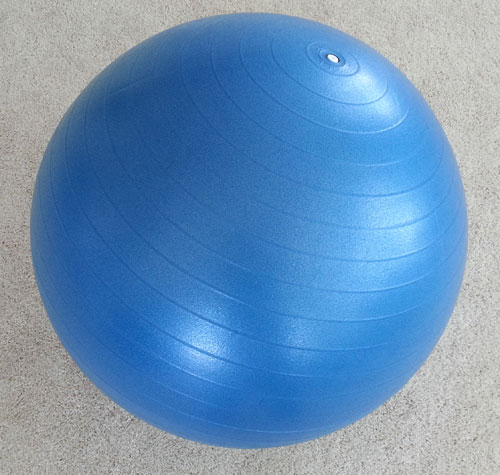
This is my new exercise ball:

ball

I’ve been using the exercise ball at the gym after my twice-a-week workouts and decided I needed one at home. It’s a fun sensory toy and a good way to stretch and release the tension that I seem to perpetually carry in my upper back and shoulders. Once, a yoga instructor who told me that I carry my negative emotions between my shoulder blades. My slightly less interesting explanation is that I unconsciously put myself in awkward postures that create tension in my body, maybe as a kind of stim. The exercise ball is a good way to consciously check in with my muscles and release the tension so it doesn’t build up into nagging injuries.

Sadly, it doesn’t have a handle so I can’t hop around the living room on it.

Some Girl Stuff

Last week Asparagus Girl wrote a blog post about perimenopause and Asperger’s. Not much has been written about menopause by women on the spectrum so I was excited to see her tackling the subject. The post mainly focuses on mood swings, which should be called mood slingshots or mood boomerangs or something more violent and dangerous and in line with reality.Think PMS on steroids.

I’ve noticed an uptick in meltdowns over the last few years as my hormones become more wacky. I’m definitely more irritable, too, and sometimes I find myself in a strange, unpleasant moods for no obvious reason. There’s other stuff–some that’s TMI even for me–and taken together all of these changes have me wondering if women on the spectrum experience perimenopause differently from typical women. Not necessarily if we have worse symptoms, but if our funky brain wiring creates unexpected side effects of the hormone fluctuations that precede menopause.

Predictably, this isn’t any substantial research on autism and menopause. Like a lot of aspects of being an autistic adult, I’m finding the best source of information is other women who are going through or have done through the process already.

Shape Shifting

Recently The Scientist said, “I’m concerned that your world is shrinking.”

I asked him why. He elaborated. I didn’t say anything substantial in response because, as so often happens, I didn’t have a coherent answer at the time.

But that statement has been roaming my brain for the past few days, measuring my current state of affairs against times past.

Shrinking implies something that was once larger or more abundant. Two years ago I was finishing up my long-put-off university degree. I was spending three days a week on campus, surrounded by people, interacting all day, commuting an hour each way, expanding my intellectual horizons. The Scientist and I also had frequent social engagements because we lived in an area where we knew quite a few people.

Since then? I’m back to working at home. My days have a predictable rhythm: wake up, workout, write, work, eat a few times in between. Some days the car never leaves the garage. The geography of my social interaction is smaller than it was when I was going to school. Or years before that, when I was working at a job that required interacting face-to-face with people all day long or when my daughter was in school and I had to shuttle her to events and such.

There was a time in between all those other times–a time when you could say that my world shrunk very small–and I found the kind of internal quiet that I hadn’t known existed. The Scientist and I moved far away from our roots, to the desert, to a place so remote that we regularly encountered coyotes on our evening walks and the nearest gas station–the nearest anything–was a fifteen minute drive.

In that place, I found a deep internal sense of quiet. I let go of a lot of old hurts. I started to understand myself.

Of course, life gradually crept in again. We formed ties. We put down new roots. I decided to go back to school. Gradually I began to feel a creeping sense of unease. The quiet I’d found receded as I found myself having to back out of that peaceful place I’d created for myself. One by one, I backed out of the rooms in my mind, turned off the lights and closed the doors, shutting away the parts of myself that I instinctively sensed wouldn’t survive being exposed to the outside world.

Until something inside me rebelled and refused to close another door. The place I’d found–it was hard to leave and harder to close away without knowing if I’d be able to find my way back. In retrospect, that internal rebellion–the tension that arose between the security of the peaceful place I’d found and the stimulation of the outside world I was being drawn back into–was the first step toward discovering that I’m autistic.

I didn’t know that then. All I knew was that something had to give.

The tension grew in a way it hadn’t before. I became acutely aware of the two very different places I lived in. There was this new place, which existed mostly when I was alone, that felt very natural. It was secure and comfortable and, most of all, quiet. I hadn’t been in a place that internally quiet in a very long time, certainly not since I’d reached an age that had two digits in it instead of one.

Then there was the other place, the one I’d taken for granted as being life, the one where I kept a stranglehold on everything to keep it from flying apart. It was a place that pushed me to grow and expand myself, but one where I lacked the natural ease I felt in the new place I’d discovered.

I tried shifting between the two places but that turns out to be impossible for me. In typical aspie fashion, I have no idea where the middle ground is. I can be here or there, but commuting between them isn’t something I can do on a daily basis. When I do shift–like I did after my recent trip, moving from the intense interaction of being with people 24/7 for 10 days to the quiet of home–it can take me weeks to rediscover my equilibrium.

That got me thinking about where the source of that equilibrium lies. I think it lies in my true self, the one that is more fragile than I’d like to admit and that I can close off inside a nice safe cocoon when I need to, safe from harm but inaccessible.

It’s scary to realize that I can intentionally dissociate myself, scarier even to think that for years I’d been doing exactly that without consciously being aware of it. At some point–probably very early on–closing off parts of myself became my main defense mechanism, a way to survive in a world I find hard to navigate and harder to understand.

That can’t be healthy. I don’t enjoy it. I wish my quiet self was strong enough to go into the world without having to close all those doors. Perhaps the place I’m in now, this revival of my quiet period as I’m starting to think of it, is my way of nurturing and fortifying my quiet self for whatever comes next.

On my trip, I felt like I had to close off myself less than I did in the past. There are some doors I can leave ajar, some lights that I can dim instead of extinguishing. Thanks to understanding my autistic brain better, I have coping mechanisms available to me now that I didn’t before.

It may be a few years before life shifts again and takes me into a new phase as it inevitably does. For now, I’m planning to make the most of this quiet period, writing and thinking and being with myself. I think a certain amount of withdrawal from the world–a redirection of my resources–is necessary for me to expand myself internally.

Is my world shrinking?

Days later I let The Scientist know that I’d found my answer. What may appear from the outside to be smaller is on the whole simply changing shape. Again.

Monday Morning Musings (6/3)

Yale Autism Seminar Video Series

I’ve been watching the Yale Autism Seminar video series (available free from iTunesU). It’s advertised as the only autism-specific college course and is basically a chance for you to sit in on the lecture portion of the course as it was given at Yale a couple of years ago. The videos cover a wide range of topics, with a strong focus on childhood autism. Each video is a 60-90 minute lecture on a single topic. A few of the lecturers include videos or other visual media to illustrate key points, but generally think “text-heavy Powerpoint presentation” for the lecture format.

Because each topic is covered by a different specialist, the quality of the lectures varies. I especially liked “Communication in Autism” by Dr. Rhea Paul. It was packed with information about how children develop language from birth through adolescence. I’ve also enjoyed Dr. Ami Klin’s presentations.

Be forewarned that there is triggery content in most episodes–not so much the factual information but the language that many of the lecturers use and sometimes their attitudes toward autistic people. I consider myself pretty resilient to triggery content but I can’t watch more than one (and sometimes only half) every few days. It’s eye-opening to see how professionals who work with autistic people view autistic people.

Not Very Neanderthal

Back in March I spit in a little tube and sent it off to 23andme to get my DNA genotyped. Last week, I finally received the results. The biggest surprise is that my body doesn’t make the lactase enzyme. I guess I’m lactose intolerant but didn’t know it? My 40s are turning out to be a banner decade for stuff like that. I also have an elevated risk for Type II diabetes. That’s good to know, because I can actually do something about it. Not so much on the elevated risk of Alzheimer’s or restless leg syndrome.

There are some fun facts among the results: I can blame my higher than average caffeine consumption on my genes and I have a significantly lower than average percentage of Neanderthal DNA (in the 8th percentile). I never put much stock in the aspie-Neanderthal theory, but I gotta admit I was curious.

I Made a Thing

I’ve been putting my Adult ASD Diagnosis series together into e-book format. This is what I have for a cover design at the moment. Yeah? No?

cover

I’ve added about 5,000 words to what’s been posted here on the website: primarily background material about ASD and the DSM-V criteria plus a big list of questions I developed to help people identify autistic traits in themselves. My main goal in making it into an e-book is reaching a wider audience. When I first went looking for information about ASD, I went to Amazon.com and did some web searches. Neither of those was very helpful. Unfortunately, I didn’t discover the blogs of autistic adults until later.

The material that’s posted on the blog will stay, so no worries about anything disappearing. I’m also hoping that I can use the proceeds from the book to do some giveaways here. I thought about donating to an autism-related charity but then I thought “hey, I know plenty of autistic people!” and wouldn’t it be better to do a giveaway of something like a weighted blanket to an autistic person who will directly benefit from it. I have no idea how this is going to work, but that’s my dream outcome.

ETA: I accidentally fell way behind on bringing over the survey replies from Survey Monkey for the final survey ! Executive Function fail.  I’m so sorry and am in the process of getting caught up. There are about 20 additional responses that I will post this morning.

(Not) a Little Slow

There is a moment I dread in conversations with strangers: the moment when that stranger–that person I’ve been talking to for a minute or two or five–decides I’m “a little slow.”

It doesn’t happen with every stranger, but it happens often enough that I can pinpoint the moment a conversation turns. To start, we’re both on our best interacting-with-a-stranger behavior, a bit wary, a bit too friendly, whatever. Then I slip. I miss some key bit of information, ask the other person to repeat something one too many times, stutter, backtrack, repeat myself, interrupt  again, lose the thread of the conversation, take a joke literally, perseverate. There are a lot of ways it could play out.

The response–the one that makes my skin heat up and my heart race and the blood in my ears pound–is subtle but sudden.

A note of condescension slips into the other person’s voice. I  may suck at reading body language, but I’m pretty good at gauging voice tone. Maybe they start speaking more slowly or repeating themselves. They downgrade their vocabulary to smaller words. They repeatedly ask questions like, “are you following me?” and “does that make sense?” They get pedantic, having decided I require some sort of instruction.

In short, they’ve decided I’m a little slow on the uptake.

At the first sign of this shift, I get a sick feeling in the pit of my stomach. I’ve been categorized by this person who knows next to nothing about me and is forming an opinion based on my spotty verbal skills, tallying them up with my inconsistent eye contact and my incongruent body language and all the other ways my body says “not like you.”

Am I Slow?

Literally speaking, I guess I am.  My verbal processing–both receptive and expressive–is impaired to the point that I often need more time than the average person to understand or respond to someone.

I have all sorts of communication glitches. I struggle with verbal instructions. If there’s background noise or other distractions, my auditory processing lags to the point that it can take a few seconds to process speech from noise into words. My verbal responses default to scripts–sometimes not even the right scripts–or become minimal when the conversation takes an unexpected turn, moves too fast or is too unstructured.

There is a significant disconnect between my verbal skills and my intelligence or literacy or whatever you want to call it.

In short, I look better on paper. If I was a shelter pup, there would be a note in my file that said, “Does not show well.”

Generally, this isn’t a problem for me. I’ve engineered my work life so that I first “meet” people via email or some other text-based correspondence. By the time we talk on the phone or meet in person, the other person has (hopefully) formed an opinion of me that will withstand some verbal glitching.

I’ve gravitated toward text-based medium in general, spending my days working primarily with the written word. Still, I have to do things like go to the doctor, contact the super in my building for repairs, and navigate the university records office to correct my transcript–all situations in which I’ve encountered the dreaded conversation shift. Situations in which I went from feeling like I was on equal footing with another adult to feeling patronized, belittled or ignored.

And here’s the thing: I am an adult. Whether I speak eloquently and fluently or not, I’m still an adult. My ability to communicate verbally has no impact on my ability to understand the way a ground fault interrupter works or what the risk factors for breast cancer are or how to read my college transcript. I don’t need to have these things explained to me like I’m a child.

What do I need, you might be thinking? My wishlist:

  1. Treat me like a competent adult.

  2. Be patient. I might need a little extra time to compose my answer or to process what you’ve said.

  3. If I ask for clarification, try explaining in a different way. If I didn’t understand the way you explained the first time, an exact repetition probably won’t help.

  4. Assume that if I don’t understand something, I’ll say so.

  5. Don’t rely on my body language or other typical cues for feedback about whether I understand what you’re saying. Unless you’re also autistic or know me very well, you probably can’t read my body language any better than I can read yours.

  6. Give me time to write down key information if I need to.

  7. Don’t oversimplify your language or speak unusually slowly or loudly.

  8. If you’re giving me verbal instructions, break them down into specific steps and explain one step at a time.

  9. If I keep repeating a question or statement, I need a stronger acknowledgement that you’ve heard and understood me.

  10. Treat me like a competent adult.

Some of the stuff on that list comes under the heading of accommodations. These are things I have to ask for because they are outside the norm and others may not know that I find them helpful.

But some of it–like #1 and #7–those should be the bare minimum we can expect when interacting with other adults, regardless of how typically or atypically we present.

Monday Morning Musings (5-27)

DSM-5 Goes Live

The DSM-5 was released last week. It’s still impossible to find the full criteria online anywhere, but here’s a summary of the major changes, according to a short video on the APA website.

1. Merges Asperger’s syndrome, PDD-NOS, childhood disintegrative disorder and autism into a single diagnosis of autism spectrum disorder

2. Diagnosis is now based on two criteria instead of three:

  • Social communication (collapsing the formerly separate social and communication domains)

  • Restricted, repetitive behaviors

An interesting shift is that while social communication impairments are seen as lifelong and pervasive, RRBs are not. An adult can now receive an ASD diagnosis based on current social communication impairments and a history of RRBs.

3. The addition of specifiers like age at onset, type of onset (skill loss or not), intellectual disability, verbal impairment, and co-morbid conditions present (i.e. ADHD, anxiety disorders, epilepsy). There will also be a 3-level severity scale assigned to each of the two diagnostic criteria.

If you’re interested in how the DSM-5 guidelines might be implemented in practice I found a set of guidelines developed for pediatricians at the University of Washington hospital. Keep in mind that those are preliminary (not necessarily reflecting the final release of DSM-5 and developed by one hospital.)

Weighted Blankets: Not Just for Kids

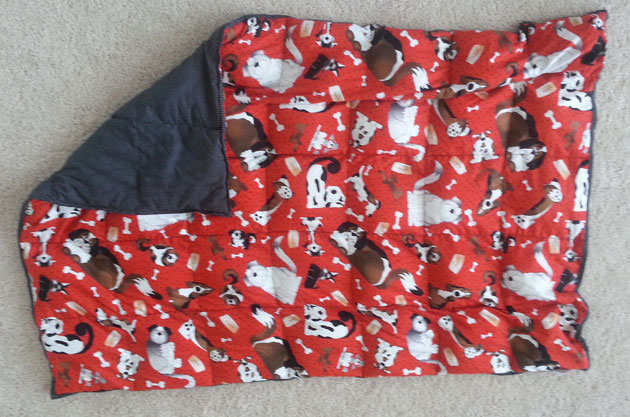
Last month my daughter surprised me with a weighted blanket for my birthday. Look how adorable it is:

blanket

It’s big enough to cover me from toes to mid-torso when I’m lying flat (or cover me entirely if I curl up on my side), which is plenty. I’ve been using it in the evenings while I’m watching TV, when I need a sensory break during the day or after a tiring outing.

It’s emotionally calming and it makes me feel more physically organized. An unexpected benefit is that my moods are less spiky since I’ve been using it daily.

From the “Change is Hard” File

My old apartment was on the 3rd floor and my new apartment is on the 2nd floor. The first few times I used the elevator here I automatically hit the 3 button, got out on the 3rd floor and was halfway to my apartment before I realized that the numbers were all wrong.

Now when I use the elevator (which isn’t often, because 2nd floor), I tell myself “2 not 3”. The funny thing is, apparently I’ve been saying it out loud. The things you don’t realize until another person is around to look at you funny. Oops.

Hearing Motion

In the comments on one of the surveys, Robin shared a cool video that can help you identify if you experience a certain kind of synesthesia in which visual motion generates sound. I didn’t hear anything when I watched it but some other folks did.

100,000 views!

Last week the blog topped 100,000 views and 3000 comments. Yay!

Sensory Seeking

The summer before seventh grade I went to an amusement park with my cousins. Until that day, my amusement park experience had been limited to kiddie rides. My parents weren’t roller-coaster-riding types and I guess they assumed I wasn’t either.

So there I was, first time in a real amusement park with real rides and roller coasters and everything and I was . . . terrified. I felt sick to my stomach just looking at the rides. But my cousins, who had been to the park many times, grabbed my hands and made a beeline straight for a ride that looked like this:

ride2

It was called Strawberry Fields and as we waited for it to start, songs from “Sgt. Pepper’s Lonely Heart’s Club Band” blared from the speakers overhead. My memory of that moment is clear as if it happened yesterday. I can hear the scratchy version of “Lucy in the Sky with Diamonds”, feel the greasy vinyl of the safety bar beneath my sweaty palms and practically taste my fear as my heart galloped in my chest.

And then we started to move, slowly at first, gaining speed, a little more and a little more until the wind was whipping my hair across my face and the three of us were pressed in a bone-crunching heap against the outside of the car and I was screaming right along with everyone else through 90 seconds of pure, unadulterated joy.

When the ride stopped all I could think was, “holy shit, let’s do that again!” And again and again and again.

I’d discovered one of my favorite sensory experiences: going fast. Blindingly fast. Mind-numbingly fast. The speed was exhilarating. I rode everything in the park. The faster it went, the more I liked it. Spinning, falling, dipping, swinging–I had no idea why I liked the intense physical sensations that the rides created, but I did. When I went back to the park on a seventh grade field trip, I spent the morning riding a roller coaster, jumping off and running around to the entrance to get right back in line.

Sensory Seeking =/= Stimming?

Now that I know about sensory seeking behavior, my sudden intense love of amusement park rides makes sense. Autistic people are often sensory seeking in a big way. We have a strong need for intense sensory input and will deliberately seek out or create sensory experiences to satisfy that need.

Sensory seeking is often described as a way to either stimulate an understimulated nervous system or calm an overstimulated system. Which sounds a lot like the typical definition of autistic stimming.

That raises the question: is sensory seeking behavior a form of stimming? There is a lot of overlap between the two, but I don’t think they’re identical. Stimming provides sensory input so I think we can say that all stimming is sensory seeking. But stimming is generally repetitive, which isn’t always true of sensory seeking.

Going on a roller coaster once or twice? Probably sensory seeking. Going on a roller coaster twenty times in a row? Could be stimming.

Honestly, I have no idea. Feel free to weigh in with your own theory, opinion or confusion in the comments.

The Wild Ones

Much of my childhood play was sensory seeking in disguise. Some of my favorite activities as a kid:

  • Going as fast as I could down big hills on my bike, roller skates or sled

  • Jumping or diving off the high board

  • Hanging upside down and doing somersaults on the monkey bars

  • Jumping on the bed (broke my jaw doing this)

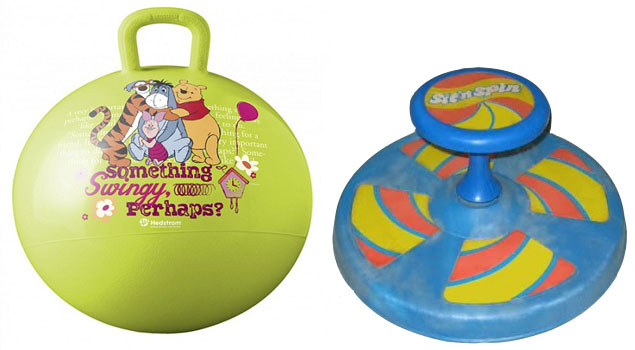
  • Bouncing on a trampoline or Hippity Hop

  • Sit ‘n spin!

  • Climbing trees and hanging upside down from the branches or jumping to the ground

  • Running into the padded gymnasium wall and bouncing off

  • Zipping my arms into my coat and playing crash dummies with a friend (this never ended welll)

  • Lying underneath my beanbag chair while watching TV

  • Swinging as high as I could on the swings then flying off

These are not especially “girly” pastimes. They’ll get you branded a tomboy and a handful. If you’re a boy, you’ll be seen as wild and unruly, maybe you’ll get an ADHD diagnosis.

My next door neighbor had a Hippity Hop and Sit 'n Spin--neither of which my parents would buy me. I didn't especially like my neighbor but I loved her toys.
My next door neighbor had a Hippity Hop and Sit ‘n Spin–neither of which my parents would buy me. I didn’t especially like my neighbor but I loved her toys.

As a teenager I took up martial arts, primarily for the self-defense aspect of it, but I discovered that I liked the contact that sparring involves. Getting hit while padded up with gear creates a very tangible kind of physical feedback. So does pounding a heavy bag or kicking a hand target hundreds of times in a row.

Although that may sound masochistic, it’s not. I don’t seek out pain. Let’s be clear about that. Although I often engage in activities that have a risk of injury and pain, what I’m looking for is a benign physical sensation–one of pressure or contact or movement–not pain.

There is sometimes a belief that people who engage in sensory seeking activities like headbanging, slamming into objects or biting themselves are doing it because pain is the desired outcome and I don’t think that’s always true. It may be true for some, but for others, those activities don’t hurt, either due to pain hyposensitivity or an ability to regulate the level of contact in a way that keeps it below our pain threshold.

64 Flavors of Sensory Seeking

While I’m primarily a proprioceptive and vestibular sensory seeker, there other types of sensory input that I’m strongly drawn to:

  • touching surfaces and objects

  • the feeling of sound resonating in my chest (Tibetan singing bowl, trains, explosions in IMAX movies, loud music)

  • the exhaustion after a hard workout

  • the smell of fire

  • being immersed/floating in water

Of course, that’s me. Everyone’s sensory seeking preferences are different. Some common examples by category:

Tactile: seeking touch from others; touching objects, textures or surfaces (either certain types or everything)

Visual: seeking visual patterns, moving objects, specific colors or shapes

Oral: seeking food or nonfood objects to taste, chew or suck on; seeking specific sensations like crunchy, spicy, or minty

Olfactory: seeking specific preferred smells; smelling everything

Vestibular: spinning, rocking, being upside down; seeking specific head or body positions; jumping from heights; seeking intense speed or movement

Auditory: seeking loud, repetitive or specific types of noises; making sounds because they’re pleasing

Interoceptive: seeking bodily sensations like hunger, thirst, urgency to use the bathroom, fatigue

Proprioceptive: physical contact, crashing into things, stretching, pressure, sound resonance

But Why?

What drives to seek out our preferred sensory inputs? I haven’t been able to find much scientific background, so I have only my personal experiences to share:

Regulatory: As a kid, I think my intense sensory seeking behavior was a way of soothing my overloaded brain. There were many many days when I couldn’t wait to get home from school and ride my bike to the top of the highest hill in the neighborhood. The hard climb up and brain rattling ride down were the only way I knew to soothe the angry anxious restless feelings that built up during the day.

As an adult, I’m better at regulating myself in more typical  ways. Still, after a long day in the city I like to wedge my body into a seat on the train so my legs are pressed up tight against the seat in front of me. I do the same thing on airplanes and long car rides. The pressure calms me and helps downregulate my sensory overload.

I’ve read that stimming and sensory seeking behavior can be stimulating (hence the term stimming) but I’m rarely in need of any added sensory stimulation. I usually have more than I can handle.

Connection: Sensory input reminds me that I have a corporeal form. It connects my mind to my body and my body to my environment in tangible ways. Without touch, pressure and movement, I can easily get disconnected from my physical self.

Organization: Some types of sensory input help me feel more organized and integrated. At the end of the day, when I’m watching TV, putting my weighted blanket over my legs keeps me from turning into a squirmy mess on the couch. Without the added weight on my legs, I’ll change positions every five minutes trying to get comfortable because my body feels so disorganized and physically confused by the end of the day.

Physical dissociation and disorganization are things I’ve only recently realized that I experience. I was going to write about them to help clarify the “why’s” of my sensory seeking but I wrote so much that it will have to be a separate post.

Not Growing Out of This One Either

I’ve always had strong sensory-seeking tendencies. I think I always will. This isn’t a bad thing. It’s actually one of the things I like about being autistic. I have the ability to experience certain sensations in ways that most people don’t.

I like the intensity and immediacy. I like the pleasure I can find in mundane everyday things like the rumble of a passing train or the feel of a matte bookcover. It’s not exactly a superpower, but does give the world around me a vivid tangible realness that I can tap into whenever I need to reconnect myself with my self.

Survey: Acceptance, Gender, Sexuality and Body Image

This is final batch of survey questions. 😦

Answers to the other surveys continued to come in for weeks after I posted them. If you want to go back and take a look, here are links to past weeks:

Special Skills and Fun Stuff

General Coping Strategies

Relationships

Sensory Sensitivities

Work and School Strategies

This week’s questions are about acceptance and gender/sexuality/body image. You can answer here or at Survey Monkey, wherever you feel most comfortable. (I’m going to break from pattern and answer anonymously this week, because . . . reasons.)

I’ve created two separate surveys at Survey Monkey:

Acceptance survey questions

Gender/sexuality/body image questions

As always, this is open to anyone, regardless of official diagnosis.

Acceptance

  1. Do your friends and family ask you about your diagnosis? Do you feel supported by them?

  1. Do you ever feel ashamed to be autistic/technically disabled/different? Especially after spending a big chunk of your life as a ‘normal’ person?

  1. Do you all experience a lot of double standards regarding your autism, and how do you deal with this? For instance, it annoys me so much that an NT person can move their hands around, fiddle with clothing etc, but when I do it, it’s stimming and therefore A Bad Thing in the eyes of others.

  1. If you could be neurotypical, would you want to be?

  1. How often do you hear someone use autistic as a pejorative?

  1. Before you realised you were autistic did you ever understand yourself as being somehow not human or not from your culture of birth? (e.g. an alien from the wrong planet or born into the wrong country, century or species etc)

Gender/Sexuality/Body Image

  1. How do you relate to gender? What is your understanding of the word/concept?

  1. Has there been a point in your life when you felt that you wanted to be, or were meant to be, a gender different to the one you were raised as? (If so, why do you think this was, how old were you, how long did this last?)

  1. Do you currently believe in or follow gender roles and stereotypes? (for example, roles/rules about how you’re meant to dress and present yourself, what interests you’re meant to have, how assertive/emotional/nurturing/etc you’re supposed to be, what role you’re supposed to take in personal and professional relationships, etc)

  1. If you are some variety of transgender or answered that you’re gender nonconformist in some way, do you think that this is in any way related to your autistic traits? Do you think you ‘do gender’ or ‘do transgender’ differently to other people because you’re autistic?

  1. Is your sexuality, romantic orientation or preferred relationship structure different from our cultural norms in some way? If so how does this differ and do you think this is related to your being autistic?

  1. Have you ever had any difficulties with your self image, if so how did these manifest? (such as physical/bodily gender dysphoria, body dysmorphia, eating disorders)

Monday Morning Musings (5-20)

This might be a new regular or occasional feature. How’s that for a commitment? There are a lot of little things that come up during the week that I’d like to share but they’re too small to make a proper post about. Instead, I’m going to roll them all up into one hot mess of a post on Mondays.

News from the Melatonin Front

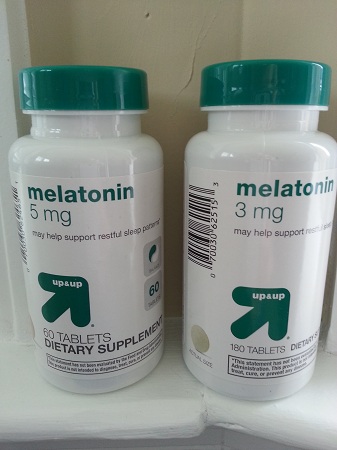
I accidentally bought 3 mg melatonin tablets rather than my usual 5 mg tablets. Cue three nights of bizarre dreams before I realized my mistake (followed by a frantic midweek trip to Target). Yikes. Now I see why some people can’t take melatonin. I didn’t have nightmares but I did have some freaky dreams and woke up feeling like the night had been about a week long.

Hey Target, think you could possibly make these bottles look anymore alike?
Hey Target, think you could possibly make these bottles look any more alike?

Research on Using the Internet as a Communication Medium

Amy Woodham, a masters student in psychology in the UK is doing a study on how women with Aspergers and High Functioning (ack!) Autism use the internet for communication. It’s a short, mostly multiple choice survey that took me about 15 minutes to complete. To participate, you need to be a female over the age of 18 with an official diagnosis of AS or HFA (I know that rules a bunch of you out, sorry). If you’re interested, you can find details here.

**Updated to add that you’re welcome to participate in the study if you are self-diagnosed/suspected AS/HFA. See the comments for the source of this additional information.

A-dar is an Actual Thing

I live next to an elementary school now. It has a giant playground with a forest of colorful plastic playground equipment, as playgrounds do these days. Last Tuesday when I took the dog out for our midday constitutional, I saw just one girl on the playground. She was walking around the paved play area, making loud vocalizations while looking at the numbers and shapes painted on the ground (for playing hopscotch and such). There were four adults nearby, chatting and paying no mind to girl’s unusual behavior.

“Wow,” I thought, “best recess ever.”

As I rounded the corner of the playground and headed out into the nearby field, I noticed another girl, hunched over at the end of a slide, scraping up and sifting through the bark mulch. Then a boy, kneeling under another slide, doing something in the dirt I couldn’t make out. Oh, and a second boy, sitting in the middle of yet another slide, flapping his hands, which were hidden in his shirt sleeves.

This seriously looked like the best recess ever to me.  As I walked by the fence, feeling happy for these kids who were getting to whatever they damn well pleased on the playground, the flappy boy slid down the slide and ran over to the chain link fence to watch me. I waved. He licked the fence.

My tribe. 🙂

Cool New Comic Series on Tumblr

If you haven’t seen Par-la-fenetre’s web comics about being autistic, check them out. They make me smile and sometimes they’re like a punch in the gut. In a good way, of course. I especially like the one about breaking routines and the one that started it all.

Got Something to Share?

This would be even more fun if you all had things to share too. What’s going on with your week? Find anything new or exciting or interesting you want to tell everyone about? Could be ASD-related or not. I have no idea how this might work, except that we should do what makes us happy.

Goal-Fish: The Neurodivergent To-Do List

One of my special skills is goading people into doing things that I think are great ideas. A few of you have been on the receiving end of this.

When it comes to getting my own stuff done, though, I have a tougher time making things happen. If you have impaired executive function courtesy of autism or ADHD (or some other neurodivergence), you know the feeling. How many times a week do I think “I really should spend some time on my novel” and “I’m way behind on responding to comments” not to mention “The kitchen counters could use a good wiping down” and “When was the last time I vacuumed?”

I’m super organized when it comes to work and bill paying and anything with a deadline. But those things that I should be doing regularly–which includes everything from housework to writing and keeping my blog in order–that stuff slips away from me so easily.

So when Slepa Ulica (who comments here under the username Anonymus) mentioned that they were designing a “smart to-do list” that would serve up tasks to do based on a whole list of customizable parameters, I got just a little excited.

A to-do list that understands crummy executive function! A to-do list that would give me one appropriate task at a time! A website for neurodivergent people created by a neurodivergent person! Much goading encouragement ensued on my part and much work on Slepa Ulica’s part.

And here it is, ready for you to try out:

Goal-Fish

Some cool things I like about this software:

1. The fish! I know that’s a silly thing to put first on my list, but the illustrations make me happy. More importantly, the interface is sensory friendly. Plenty of white space, no busy layouts, moving images, sounds or loud colors to assault my brain. Just the minimum of information that I need, accented with whimsical illustrations. (The website also has a boatload of accessibility features which you can read about in detail if you like.)

2. Unlike regular to-do lists, Goal-Fish understands that not all tasks are created equal and we don’t always feel up to tackling certain chores. The constraints feature allows you to limit tasks to what you’re capable of doing (based on energy level, time of day, etc.) and how much time you have. Once you’ve input your constraints (which will take less time to do than it took you to read about it here), you press a button and the software gives you an appropriate task.

For example, I set up a 15-minute time window, a pain (you can change this to spoons, energy, etc.) level of 4 and no helpers. The software gave me “change sheets” which I should probably go do now because I have no idea when I last did that. Increasing my pain level to 6, it told me to take out the trash. When I decreased my pain level to 1 and increased the time to 30 minutes, it told me to clean out the fridge (another task I should do more regularly).

3. What you see when you first start using Goal-Fish is Slepa Ulica’s tasks and categories. You can edit tasks to fit your needs, add your own tasks, assign them to categories, change/create detailed instructions for each task and modify the constraints. Depending on how much time you want to spend, you can do quite a bit of customizing.

The fish is doing laundry. The fish wants you to laundry, too. You don’t want to let the fish down, right?

4. It’s free. Wow, right? Of course, if you’re feeling generous and can afford to, you can throw a few bucks Slepa Ulica’s way. If you do, you’ll get an additional 20 tasks and 6 categories added to your account. Plus the good feeling that comes along with supporting a cool project by a member of our community. Just use that bright shiny donate button at the top of the screen.

5. The detailed instructions can include as many or as few steps as you need. Some of us may be fine with “do laundry” as a single instruction. Others  may need a detailed list of steps to complete more complex tasks like doing the laundry. I can see this making a great independent living tool for pre-teens, teens or adults who need support in completing daily self-care tasks.

6. It almost makes doing chores fun. Clicking the button and getting a semi-random chore makes completing tasks feel like part of a game. Also, having a time limit on a chore makes mundane tasks less open-ended and onerous. If I decide I want to spend 15 minutes on a chore and the software tells me to go pick up stuff, then I feel good about spending 15 minutes or less picking stuff up, even if I don’t get every last thing put away. Without that limit, I’ll avoid even starting because I know I can easily end up spending an hour straightening up, getting distracted, drifting off into other tasks, etc. and then feel like I got nothing substantial done.

I’m going to close this out with Slepa Ulica’s description of why the software is called Goal-Fish, because it ties in nicely with #6 and it made me smile:

“I got to thinking that my todo list is kind of like one of those digital pets where you have to order it to do things, feed it, water it, and take care of it, except in reverse. I’m the digital pet, and the computer is the person telling me to clean my room.”

If you have questions or comments, Slepa Ulica (Anonymus) has promised to reply to them here or you can find an email link at the bottom of the software’s help page.

——-

Obligatory disclaimer: I didn’t receive any compensation for reviewing the software/website.