Survey: General Coping Strategies

Welcome to week 3 of our survey.

I’ve slightly revised the schedule due to some additional questions that were posted over the weekend. This week we’ll do general coping strategies. Next week we’ll do special skills and fun stuff. When I get back from my great big adventure some time in May, we’ll do acceptance and gender/sexuality/body image.

You all probably know the drill by now, but in case anyone new wanders in: answer as many questions as you like, here or anonymously at Survey Monkey. Talk amongst yourselves about the answers if you like.

Also, you might want to have a look at the last two weeks’ surveys on relationships and sensory sensitivities/work and school strategies. Answers to both are still coming in!

Take the Survey Monkey version here: general coping strategies.

Although some questions reference diagnosis, this is open to all those who identify as on the spectrum (professionally diagnosed, self-diagnosed  and suspected aspies/autistics/people with autism).

General Coping Strategies

  1. What positive changes did you make to your life after your diagnosis?

  1. Over-apologising/apologising as a reflex action: Seriously, “sorry” has become my standard greeting to people at uni. Does anyone else do this? Has anyone managed to break the habit? How?

  1. How do you all describe what it’s like to be you to someone else? What do you compare these things to in a way that makes others have that aha! moment? more details here

  1. Does anyone else have issues with conflict/arguments/shouting matches in front of you? How do you deal with this?

  1. Does anyone else have trouble with “future planning”? a little more info here

  1. How do you stay on top of cleaning? What contextual cues do you use to get you to do things around the house?

  1. Do you catastrophise and if so, have you strategies for managing it?

  1. Do you experience emotional distress, such as depression and grieving, in unusual ways, such as increased sensory challenges or physical pain?

  1. Do you have trouble speaking at a normal pace? Do you have any tips for modulating your voice?

  2. Have you experienced chronic fatigue or chronic pain? Do you have other chronic illnesses? If so, do you think autistic traits such as poor emotional awareness and sensory differences such as oversensitivity to pain or muscle discomfort have any effect on these?

Adult ASD: Disclosure

This is part 13 of the “I Think I Might be Autistic” series.

Disclosure, it turns out, is a sticky issue. My first instinct was, “This is great! I have an explanation for my difficulties. I’ll tell everyone and they’ll be as happy about it as I am.”

Er, no. Disclosure makes people uncomfortable. Most people don’t know what to say. Many will reassure you that it makes no difference and then proceed to treat you differently. Even in the people who are very accepting, you may notice the occasional patronizing statement or doubt about your competence–little shifts in the way this person sees you now that you’re autistic.

Not that you weren’t autistic before, of course. But handing a label as loaded as autistic to another person changes things, like it or not.

Who to Share Your Diagnosis With

Some people openly disclose to everyone. Others share only with close friends and/or family. Some people disclose in stages, starting with an inner circle and working outward as they feel more comfortable.

As you think about disclosure, keep one thing in mind: it’s irrevocable. Once you share your news with someone, you can’t unshare it. You also can’t guarantee that the person you’ve shared with will keep your disclosure private. They may inadvertently or intentionally “out” you to someone you aren’t ready to share with.

Still, many of the people in our lives already know that we’re a little different. Generally, most people choose to share their diagnosis with the people closest to them. This might include immediate family, close friends and/or a significant other. If you prefer not to share beyond this inner circle of people, be sure to make it clear when disclosing that your diagnosis is private information.
disclose1

Beyond your inner circle, it may become harder to decide who to share with. Obviously, you don’t need to notify casual acquaintances but what about work colleagues, supervisors, professors or others that you interact with regularly?

It may help to consider the consequences of disclosing versus not disclosing. If you’ve only recently been diagnosed then you already have a good idea of what not disclosing looks like. Are you happy with the current situation? Would disclosing allow you to ask for needed supports or accommodations? Is it possible that disclosing would create more risks than benefits?

There are real dangers to disclosure in some situations. You can open yourself to discrimination and bias, especially when it comes to work, school, or your parenting rights. I’m not writing this to frighten anyone. Just be sure you’ve done your homework and thought through the possible consequences before choosing to disclose your diagnosis. If you’re unsure, consider talking with a trusted friend or mentor before making a decision.

What to Say

There are two ways to go about disclosure. You can make a full disclosure, using the words autistic, Asperger’s syndrome or autism spectrum disorder. If you decide to go this route, be prepared to do some education. There’s a good chance the other person’s first reaction will be “but you don’t seem/look/act that autistic” or “I never would have guessed” or some other similarly awkward reply.

Preparing a short script describing autism as a neurological condition that impacts your communication, socialization and sensory processing can be helpful. The operative word here is short. You don’t need to give the person a TED talk on autism. Just share a few facts relevant to your situation, including what kind of accommodations or supports you’re requesting.

If you aren’t going to request accommodations, it’s probably best not to disclose in a work situation, unless you’re the kind of person who is confident with being out to everyone. Because of the stigma associated with ASD, the risks of workplace disclosure can be significant and irreparable.

There is always the possibility that disclosure will bring with it the subtle, hard-to-prove sort of discrimination that doesn’t rise to the point of being actionable under law. Although autism falls under the purview of the Americans With Disabilities Act, human social interaction is unpredictable and fraught with gray areas.
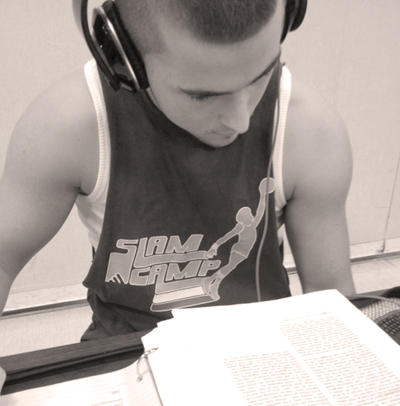
disclose2You may be able to request accommodations or supports without using the word autism, if that feels safer. For example, if you have a job doing data entry in a noisy workspace, you can explain to your supervisor that wearing noise canceling headphones will enhance your concentration and make you more productive.

If this request is well received, you don’t need to disclose your disability if you prefer not to. If it’s not received well, you’ll likely have to disclose that you’re autistic to gain accommodations under the Americans With Disabilities Act. It’s a good idea to do some research about your rights and your employer’s obligations under ADA before proceeding. For example, here is a list of common types of accommodations.

While ADA provides a minimum set of rights and obligations, some disability-friendly workplaces may be willing to do more to accommodate employees. On the other hand, be aware that small businesses (fewer than 15 employees) are not subject to ADA requirements. That doesn’t mean that a small business won’t be willing to work with you on accommodations, just that they aren’t required to under law.

When to Disclose

There is one more caveat to the choice not to disclose. If you don’t share information about your disability upfront, sharing it when you find yourself in a bind will probably not be helpful. For example, two months into a new job, your supervisor calls you into his office and says you’re being put on probationary status due to poor performance. This is not the time to disclose that you’re struggling because you really needed to get all of your instructions in writing or you need to have tasks broken down into smaller elements with more closely supervised due dates . . . because you have autism.

If you know you’ll need accommodations to successfully complete work or school tasks, ask for them upfront. If you discover that you need accommodations in the course of doing a task, request them as soon as possible. Don’t wait until you’re on the verge of disaster. This will be seen by most people as “using your disability as an excuse.” Fair or not, that’s how it will be perceived, possibly making it harder to gain the needed accommodations or even to keep your job in the long run.

There is also a special situation in which you may need to unexpectedly disclose your condition: an emergency. Some autistic people carry a card or letter in their wallet briefly describing what ASD is and how it might affect their responses in an emergency. If you lose speech, respond negatively to being touched by strangers, or have sensitivities to flashing lights or loud noises, this information can be especially helpful for law enforcement and other first responders. This type of disclosure can prevent police or emergency medical personnel from mistakenly thinking that you’re drunk or intentionally uncooperative.

How to Disclose

I’m going to step backward here a bit and address this to those who are diagnosed and those who aren’t because disclosure is something that I found taking place at all stages of the journey. In the very early days of learning about ASD, you may find yourself needing to talk about your suspicions or realizations with someone close to you. As you move through the self-discovery and diagnostic process, you may need to talk with family members to gather information about your childhood or confirm details about yourself.

Disclosure doesn’t only happen after a diagnosis. It can take place in stages, along a continuum. So here are some suggestions that may apply during different stages of the process:

  • Request a formal meeting or schedule a conversation. This signals that what you intend to say is important. Most appropriate for work and school related disclosures. Also good for situations where you’re concerned that the other party may not take you seriously.
  • Raise your diagnosis informally in conversation, when the opportunity arises. Probably more appropriate for those you anticipate being supportive.
  • Share an article about ASD. This is a good way to open the “does this sound like me?” conversation with someone close to you. 
  • Send an email or letter disclosing your diagnosis and sharing relevant background information about ASD. Good for disclosing to people you find hardest to tell, for example family members who you’re concerned might have a critical reaction. 
  • Share a form letter or informational flyer. An efficient way to share key facts in situations like emergencies or when requesting accommodations from public places (like a theme park). The book Ask and Tell has some good examples of form letters for specific situations.
  • Enlist an ally. If you’re faced with an especially hard disclosure situation, an ally can help you deliver the news, answer questions and/or offer moral support, especially if there’s a chance you might become nonverbal during the encounter.

disclose3

Why Are You Disclosing

Ultimately, this is the most important question. Before you disclose to someone, ask yourself what you expect to happen. Are you disclosing to ask for accommodations or understanding? Are you seeking acceptance and support?

What if you don’t get what you’re seeking? Sadly, this is often the outcome. Disclosure is hard. It requires a certain amount of fortitude, not just for the act of disclosing but for standing up to all that follows in the wake of it. Think it through, go slowly and enlist support from trusted people in your life.

Up next: An Evolving Sense of Self

Kindred Souls

Four years ago, The Scientist and I adopted a dog. This is Emma, a few days after we brought her home:

OLYMPUS DIGITAL CAMERA

Emma was a rescue. She spent nearly 3 months in the shelter system. The week we adopted her, she was featured in the shelter’s weekly newspaper ad that highlights the hard cases. We didn’t know that at the time.

When we visited the shelter, The Scientist and I agreed to walk around separately and then compare notes on the dogs that seemed like good possibilities. Emma was on The Scientist’s list; I hadn’t noticed her. Most of the dogs in the shelter come running to the door of their enclosure when a person walks by. Emma sat in the back corner, wary and watchful.

But that was okay. I understand what it means to fear change.

She fit my criteria (female, medium-sized, short-haired, not hyper or teething or a submissive piddler) so we took her out to the shelter’s backyard for a visit. As soon as we let her off the leash, she ran to the opposite side of the enclosure, as far away from us she could get.

We sat down on the gravel and waited. Eventually she came over to tentatively check us out. I didn’t realize at the time what a huge step this was for her. After talking it over, we decided to take her home.

We had no idea what we were getting into.

Shortly after arriving home, I took her out into our walled-in backyard. When I turned on the hose to water some newly planted trees, she jumped the three-foot wall and bolted.

All I kept thinking as I tried to lure her close enough to grab was, “If I call the shelter and report her missing on the same day we adopted her, they’ll never let me have another dog.”

I finally managed to coax her back into the yard. In the coming days, every time I turned on the hose she bolted over the wall. When I unloaded the dishwasher, she ran off to hide in another room. When the laser printer started up, she fled from my office like a bomb had gone off. When I picked up a ball to throw it, she cowered and hid under a bush.

But that was all okay. I understand what it means to have seemingly irrational triggers.

We took her to the vet for a check-up. One of the first things the vet said was, “You need to start socializing this dog immediately or she’ll bond exclusively with you and won’t be able to tolerate anyone else.”

At the time, I was having trouble imagining her bonding with anyone. She was content to spend her days alone in the yard. Some nights it took me a half hour or more to get close enough to leash her and bring her inside. Even when it was snowing, she preferred to dig a hole and curl up in it, oblivious to the snowflakes accumulating on her. Once I got her inside (she refused to let the Scientist get close enough to leash her), we had to lie flat on the floor and be very quiet to get her to approach us voluntarily.

But that was okay. I understand what it means to be slow to trust strangers.

She was an exceptionally good dog. She climbed on the couch once. I told her to get off. She never did it again. She never chewed up a shoe or a sock or anything else that wasn’t a dog toy. She rarely had an accident inside. What she did do–and still does when she’s anxious–is pace. Relentlessly. In circles. She also compulsively dug holes all over the yard.

But that was okay. I understand what it means to engage in repetitive comforting activities when you’re anxious.

I researched how to socialize a traumatized dog. I rewarded her for channeling her stress into her chew toys, for smelling objects that frightened her, for making eye contact. We enrolled in puppy kindergarten. For the first six weeks, we had to carry her into the classroom because there was no way in hell she was going through that door voluntarily.

It was too noisy, too unfamiliar and there were too many strangers. It took both of us to manage her during the hour-long class. We were all exhausted when it was time to go home.

But that was okay. I understand what it means to struggle with new situations, strangers, and loud noises.

I read and read. I was becoming an expert on dog socialization. One book after another emphasized the importance of routines in making a traumatized dog feel secure. A dog that knew what to expect was a happy dog.

This was not news to me.

Gradually we got to know Emma and she got to know us. We discovered that she has some scars–one of her ears never grew (it’s all scar tissue), her muzzle is scarred, and her right rear hip bone sits half out of the socket, poorly healed from some unknown injury. We don’t know her early history, but the evidence points to a rough start in life.

em1

We also discovered that she loves to play and is very affectionate with people she’s grown used to. She warms up to friendly strangers more quickly these days. She’s still terrified of children, but has learned to politely share an elevator, as long as everyone stays on their own side.

She’s a loyal guard dog, an enthusiastic running partner and she instinctively knows when one of us needs comfort. The last time I had a meltdown, she came and laid her head on my cheek as I was curled up on the floor, crying. She reminds me to feed her if I forget and nudges at my elbow to get me to take a break when I’ve been at the computer too long.

She’s come to understand what I need in much the same way I learned to understand her in those early weeks and months.

They say dogs resemble their people–or is it the other way around?–and as you’ve probably guessed, Emma and I are kindred souls. I wonder if The Scientist picked her out because she reminded him of me.

Survey: Sensory Sensitivities and Work/School Strategies

The response to the relationship survey last week was fantastic! People continued adding answers all week, so you might want to pop back there and read the latest responses if you haven’t.

This week we have 8 questions about sensory sensitivities and 6 about work/school. You can answer here in the comments or anonymously at Survey Monkey. I’ll bring the Survey Monkey answers over and paste them as comments.

A reminder: this is open to all those who identify as on the spectrum (professionally diagnosed, self-diagnosed  and suspected aspies/autistics/people with autism). Answer as many or as few questions as you choose. Tell us about yourself. Have fun!

I’m so excited by how many answers each person got to their question last week. Y’all are awesome. On to the questions . . .

Survey Monkey has a 10 question limit per survey so I had to make 2: sensory sensitivities and work/school strategies.

Sensory Sensitivities

  1. Does anyone else in the adult autistic blog-munity have issues with temperature sensitivity? If you have issues with heat, how do you cope with summer weather? With the effects of exercise? more details here

  1. For those who have hyper-sensitivity to light and sound: How do you cope when you find yourself starting to get overwhelmed, but can’t leave immediately? How do you recognize when you’re starting to hit that point of sensory overload? How do you deal with the aftereffects of the overload – and what aftereffects do you notice? How long can it take to deal with the aftereffects? more details here

  1. What texture sensitivities do you have? What specific textures are bad? How does your body react to them? more details here

  1. Bras. Do you also find them very stressful to wear? If so, have you come up with a solution to that?

  1. Shoes. Do you have difficulty finding comfortable shoes? What is your preferred choice of footwear?

  1. Does anyone else find showers almost physically painful?

  1. About sensory issues, how did you react to a overload and did you know at first why you reacted this way? Or was it simply a reaction without really know why you were annoyed/angry/overreacting?

  1. How many of us here find earplugs and Mp3 player to be important when going out? Does the stress level go up when you can’t have it on when being stuck in crowed or noisy places?

Work/School

  1. What kind of job would be right for your own ‘brand’ of autism?

  1. If you work, how do you cope with your errors in understanding they way that most humans think and behave, not just non-verbal language, but office politics and similar inexplicable behaviours?

  1. I get very anxious about interviews – what strategies do you have to cope with these?

  1. How do you deal with being bullied at work? (or anywhere else)

  1. How do you get a job if you can’t use the telephone?
  1. Have you ever asked for accommodations at work or school? How did it go?

Adult ASD: Moving Forward After Diagnosis

This is part 12 in the “I Think I Might Be Autistic” series.

The decision to pursue a diagnosis was difficult to make. There were times when I doubted my choice. Was it necessary to have a professional diagnosis? Would it make a difference?

Having gone through the process, the answer to both questions is yes. I have a strong need for closure. I don’t deal well with gray areas and uncertainty. That piece of paper that says, “299.80 Asperger’s Syndrome” closes off an avenue of doubt for me.

It also allows me to say this: if you think you’re an aspie or autistic–if you’ve done the research and talked to other people on the spectrum and see yourself in them, if you’ve identified a long list of autistic traits in yourself and come to the conclusion that ASD describes your particular set of neurological differences–then you are very likely correct. With or without an official-looking paper diagnosis, I think we are our own best judges of our neurology.

So, yes, getting diagnosed was worth the time, effort and expense for me. Yes, I’m fortunate to be in a position to have access to the resources I needed to pursue it. Yes, I also believe that self-diagnosis can be valid.

One of the reasons I’ve written in detail about the process is because I know that not everyone can afford or has access to a diagnosis. Not everyone is ready to pursue getting diagnosed. Not everyone has the executive function or the emotional resources to run the gauntlet of medical and mental health providers. Not everyone needs or wants a formal diagnosis.

But I think everyone who has bothered to read 11,000+ words of this series probably shares my interest in self-discovery. We know that we’re different and we want to know why and how and what that means. I spent less than 8 hours with the people who diagnosed me, but I’ve spent hundreds and hundreds of hours researching and writing about being autistic. That, ultimately, is what matters most to me.

My diagnosis, though it allowed me to put one set of questions to bed, has raised plenty of others.

  • Are there things in my life that I want to change?

  • Should I go for therapy?

  • Who should I tell?

  • How?

  • What does it mean to be Autistic?

These aren’t questions I can answer conclusively, even today.

Time to Change?

Once the newness of the diagnosis began to wear off, I was faced with the question of what to do with this new knowledge. I have a 10-page report from the neuropsychologist listing my cognitive strengths and weaknesses. I’ve become more familiar with and conscious of the areas where I struggle.

I’ve been told, not for the first time, that therapy would be beneficial. It’s an idea that I keep kicking to the back of the line, intent instead on rigorous self-examination. Like everything else I write about here, that’s my personal choice and not necessarily one that’s going to be right for anyone else. I’m not even sure if it’s entirely right for me.

Slowly, I’ve been working at making specific changes. I’ve written about being more flexible, allowing myself to stim more, trying to reduce my insomnia and nightmares, learning to translate from aspie to NT and back, and exploring my emotions.

I’ve also written about the things I’ve decided need accepting rather than changing: my lack of empathy, my anxiety, my tactile defensiveness, my love of being alone. My litmus test for change vs. acceptance is simple: is the cost of changing this thing higher than the benefit I’ll gain from the change?

Some changes require little more than mindfulness or occasional reminders; other changes require me to move out of my comfort zone and face some hard truths. The outcome–or at least the goal–is that I struggle less with some aspect of my life. Those are the good changes, the ones I’m eager to make.

Other changes feel pointless to me. These are often the changes that would make other people more comfortable by making me seem less odd. With all of the things I could be working on, I don’t see the point of investing my limited energy in those types of changes.

In fact, since getting diagnosed, I’ve become more echolalic, more stimmy, less conscious of censoring myself. I’ve become gentler and more compassionate with myself. I push myself less; cut myself slack where I wouldn’t have before. Not because I see myself as disabled, but because I see myself as a person in need of care.

I never really gave much thought to self-care before. I often demanded a level of performance and perfection from myself that I wouldn’t have expected from another person. I was so busy pushing myself to be better, to get things right, that I often neglected to be kind to myself.<

Perhaps that’s the biggest change I’ve made so far: I’ve resolved to be kind to myself.

Obviously, these are very personal decisions. The constellation of things that I choose to work on changing is unique to me. It continues to shift and grow. There are days when I think, “screw this, why should I change anything?” There are days when I think it would be nice to be “normal” for a day, to not have to struggle so much with simple things.

Then there are days when being autistic recedes into the background, not because I’m less autistic, but because I’m more comfortably autistic. Little by little, I feel myself healing old wounds, integrating the shiny new realizations, and becoming more myself.

That’s the best change of all.

Up Next: Disclosure

The Seductive Illusion of Normal

Ninety-eight percent of the time I’m good with being autistic. I was going to say “fine with being autistic” or “okay with being autistic” but I don’t want to use tepid adjectives. I really truly feel good about myself most of the time.

Then there’s the other two percent. The hard, ugly, maybe I shouldn’t be saying this but I’m wishing for normal two percent.

When I was four or five years old, I wished I was a boy. Boys got to roughhouse and play cool sports and go shirtless in the summer.

I tried the shirtless thing. It landed me in trouble, though as far as I could tell I looked no different from the shirtless boys in the neighborhood. Later, I hung around the pick-up games and sometimes the older kids let me play. I learned to throw a tight spiral and catch a long pass no matter how bad it made my ice-cold hands sting afterward. Eventually, I learned to fight.

The desire to be a boy faded.

In third grade, I wished my curly hair was straight like Marsha Brady’s. All of the cool older girls-and by older I was thinking fifth graders–had straight hair. Somehow, it seemed like straight hair would magically make me popular.

A couple of years later “Farrah Fawcett hair” was all the rage, and if I spent enough time with my mother’s blow dryer and roller brush, I could feather my hair perfectly. It didn’t make me popular but it cured me of the illusion that better hair was the key to eternal happiness.

I’ve wished for other things over the years. To be taller: more clothing choices. To be more coordinated: I didn’t make the cut for high school sports. To be more feminine: I’m not sure why, exactly.

hearts

As I’ve gotten older, the wishes have become more amorphous.

Now I find myself trying to sort out where this wishing to be normal falls. Is it like wishing for Marsha Brady hair–that one elusive change that will make me magically popular? Or is it like wishing to be a boy so I can play shirtless in the summer?

Surprisingly, I think it’s more of the latter–more of a practical wish. You see, when I most find myself wishing to be normal is when I see the people around me struggling with the–well, for lack of a better term, let’s call it the side effects of my autism.

I don’t live in a vacuum. I say and do stuff. People around me are affected by it. Even though they know I struggle with certain things–they know this logically. That doesn’t prevent them from being affected by my words or actions or lack of words or actions.

This is when the wish to be normal sneaks up and grabs me.

I’m using normal and not neurotypical here for a reason. Normal is an illusion and I know it’s the illusion that I’m wishing for at these times. I’m not wishing for a different neurology so much as a fantasy version of life.

It’s easy to be seduced by the idea that being normal would solve everything, that it would make the lives of the people around me easier. But, of course it wouldn’t. We’d have some other problems instead, because life is like that.

And still it’s there, born out of frustration and insecurity, of a sense of never quite being good enough or right enough or just plain enough.

Maybe it’s a self-esteem issue. Mine has never been especially good. I seesaw between overconfidence and underconfidence, with no idea where the sweet spot in-between lies. Does anyone truly know this? I’m not sure.

I’m not sure it even matters. This will all pass. It always does.

At some point, I see the illusion for what it is, and the desire fades.

It always has.

—–

This post is also available in Portuguese

Survey: Let’s Talk about Relationships

Thank you for all of the thoughtful questions! There are a total of 49–obviously too many to answer in one week. I’ve divided them up by subject, because, you know, autistic and need to categorize everything. I’ll spread the survey out over the next four weeks.

The vote on where to answer was a virtual tie so we’ll do it both ways. You can answer here in the comments or you can answer anonymously at Survey Monkey.

If you answer at Survey Monkey, just fill out the questions that apply/appeal to you and leave the rest blank. I’ll bring the Survey Monkey answers over here and paste them into comments so that everyone can read them.

If you answer here, it might be helpful to number your answers according to the question numbers. So if you’re answering questions 3, 5, 7 and 8, your answers would be numbered 3, 5, 7 and 8. That way we can easily scan down the comments looking for answers to the questions that interest us most.

A few questions were on the long side so I tried to include the essential information here and then added a link back to the original comment for more details.

This week’s topic is . . . relationships–friends, family, significant others, etc. Next week will be work/school and sensory sensitivities. Week three will be general coping strategies and acceptance. Finally, week four will be special skills and fun stuff.

ETA: Although a couple of questions reference diagnosis, this is open to all those who identify as on the spectrum (professionally diagnosed, self-diagnosed  and suspected aspies/autistics/people with autism).

Relationship Questions

  1. Does anyone find that you really long for close friendships?

  2. Does anyone obsess over someone you’ve just met? ( almost like they become your ‘special interest’ )

  3. Is anyone part of an Aspie married couple or long-term partnership?

  1. What stuff have you learned about interacting with other people that you think is important to know but was not obvious to you at first?

  1. How do you cope with parents who care, and are taking care of you (or at least helping you work on taking care of yourself), but don’t *understand* you? Don’t have the conception of how hard it can be to do things, like work on not taking naps when you end up exhausted, or deal with financial stuff, or do job searching, or talk on the telephone? more details here

  1. How has your partner (if you have one) reacted to your late diagnosis and do they now see you as ‘disabled?’

  1. Do you have autistic friends and if so, is it easier to hang with them rather than neurotypical folk?

  1. What about the times that you don’t feel like having physical interactions with anyone? You don’t want hugs, kisses, or even simple touches. I am usually overwhelmed with sensory stuff at that point (auditory, visual, touch, taste, the whole mess) and I have trouble articulating it. Should I wait until I’m not in a crisis and try to describe these things to others in a way they might understand better? more details here

  1. Has anyone been disowned by their family at diagnosis?

  2. If you have children, are they aware of your ASD and how do they feel about it?

Adult ASD: Receiving a Diagnosis

This is part 11 in the “I Think I Might Be Autistic” series.

The day of the follow-up appointment finally arrived. As I rode the elevator up to the fourth floor, I felt my anxiety skyrocketing. I focused on breathing. I mentally rehearsed what I was going to say to the receptionist.

“I have a 2 o’clock appointment with Dr. H” isn’t complex conversation, but when I’m at a DEFCON 1 anxiety level, I can forget my own name.

The ten minutes I spent sitting in the waiting room felt interminable. I was contemplating a dash to the restroom when Dr. H poked his head around the corner and called me in.

If you want an example of how, er, unusual my conversation style can be when my social resources are low, this is the way our conversation began:

Dr. H: “Good to see you again. What’s new since you were here last time?”

Me: “You rearranged your chairs.”

Well, he had. The last time I visited, there was one guest chair facing his desk. Now there were three. That was not only new, it was messing with me, because I had to decide which one to sit in and none of the options was comfortable.

Too many chairs!
Too many chairs!

I settled on the middle chair and waited patiently while he made small talk about I have no idea what. Okay, semi-patiently. There was some discreet stimming happening. Maybe a lot.

Eventually–and I think the delay was him wanting to break it to me gently–he got around to telling me first how well I did on the cognitive testing and then that I’m clearly on the autism spectrum. I was relieved and yet somehow it felt unreal. For a moment I thought maybe I was dreaming because I’d been having a lot of dreams about the evaluation and follow-up appointment.

My nonresponse confused him, I think. Over the course of our one-hour appointment, he asked me three times how I was feeling about the diagnosis. Each time I said something like, “I guess I’m not that surprised.” I thought I’d feel something more strongly, but I was too focused on the information he was giving me about my test results to have any real feelings.

Seeing my cognitive processes summed up in a neat table of numbers and percentiles was fascinating. I hadn’t had a full IQ test since I was kid and back then no one would let me see the results.

Overall, the tests told me what I had suspected. My working memory, elements of executive functioning and verbal functioning are impaired. My nonverbal reasoning and verbal comprehension are significant strengths. The rest of my test scores fell in the average ranges.

I passed the ADHD test with flying colors, meaning that my distractibility is related to AS/executive function. This wasn’t a surprise, because my attention problems are situational rather than across the board.

The tests also illustrate how it’s possible for me to be both very literate and not very verbal. I scored highly on comprehension, spelling and vocabulary–receptive language skills or the ability to understand and process incoming words. I scored poorly on visual to verbal tasks (translating written words into speech), verbal working memory (remembering and repeating back spoken words) and verbal fluency (describing or listing words verbally). These are all expressive language skills.

There is definitely faulty wiring between my thoughts and my speech. There is a measurable  discrepancy between my receptive and expressive language capacity. It feels good to have concrete evidence.

You’ll often hear that ASD is associated with an uneven or spiky cognitive profile. While everyone has some variation in their cognitive abilities, the variation tends to be within a particular band (i.e. clustered around the 70th and 80th percentiles) rather than widely dispersed.

To give you an idea of how dramatically disparate the cognitive abilities of autistic individuals can be, I had a bunch of scores in the 98th and 99th percentiles, but I also had a cluster that included the 8th, 10th and 12th percentile. I am simultaneously off-the-charts extraordinary and bottom-of-the-barrel impaired. In yet other areas, I’m perfectly average.

One thing that really struck me in reading about spiky cognitive profiles and autism is that a profile like mine (nonverbal > verbal) is more strongly associated with impaired social skills than the reverse profile. It’s also interesting to note that the dissociation between nonverbal and verbal abilities grows more significant with age.

After reviewing the test results and confirming that I was okay with my diagnosis, Dr. H emphasized that he was most concerned about my social anxiety and felt that counseling would help me cope better with my daily life. He gave me a referral to a counselor experienced in working with autistic adults and I agreed to think about it. After thinking about it a great deal, I wrote this.

It took awhile for my diagnosis to sink in. At first, it didn’t feel real. In a way, I’d known for a while that I was an aspie. Dr. H even jokingly said at one point toward the end of our follow-up appointment, “You made a good diagnosis, doctor.”

In the days that followed, I slowly started to feel the peace of mind that I’d been craving settle in. By the time I received the written report on my tests, with its official looking diagnostic conclusions, I finally felt some closure.

Next: Moving Forward After a Diagnosis

Is there a Link Between ASD Motor Skill Deficits and Social Communication Difficulties?

I started this post thinking it would be about dyspraxia and Asperger’s. Dyspraxia, difficulty with fine and gross motor coordination, is often diagnosed alongside ASD. Adult symptoms of dyspraxia overlap with adult ASD traits to the point that even the experts have trouble separating the two. In fact, autistic individuals are sometimes misdiagnosed as dyspraxic.

If the experts are confused, I’m certainly not going to untangle the topic in a single blog post, so I decided to set that idea aside and write about general movement difficulties. Aspies are a notoriously clumsy lot. I’m forever tripping over stuff, bumping into stuff, dropping stuff, breaking stuff.

Seriously, if you like your stuff, keep me away from it.

I’ve broken an entire kitchen’s worth of glassware in my lifetime. In the first month of owning a new blender, I broke the glass pitcher not once, but twice. You’d think I would have learned the first time not to put it down so forcefully on the counter. After the second one shattered, I downgraded to a plastic pitcher because a blender is not worth that kind of trauma.

Gross and Fine Motor Impairment is Nearly Universal in ASD

The theories about why aspies are so uncoordinated are many: motor planning deficit, motor development delay, motor timing impairment, problems with initiation or inhibition, imitation and praxis impairments, deficient postural control, under reliance on feedforward control. There are also a handful of other conditions that muddy the waters further: apraxia, ataxia, hypotonia, dysgraphia, dyscalculia, dyskinesia . . .

You see where this is going, right? It would be easy to write a book on the subject and still not cover everything. Just defining all of those things would require a whole series of blog posts.

There are a few things that most of the experts agree on:

  • Some level of gross and fine motor impairment is nearly universal in people on the spectrum.

  • Motor impairments may improve somewhat with age, but generally persist into adulthood.

  • With more study, motor development delays could be a reliable indicator of the presence of ASD in very young children.

  • It is unclear whether dyspraxia is a separate diagnosis or the features of dyspraxia overlap with features of ASD.

  • The cause of motor development delay in autism is unknown.

It’s interesting that once again we have something (like insomnia) that occurs in the majority of autistic people but is not part of the diagnostic criteria. Autistic children routinely receive occupational therapy to improve their fine motor coordination, balance and posture; motor impairment is nearly universal. So why isn’t fine/gross motor skill impairment officially one of the diagnostic criteria?

What if Motor Impairments are Connected to More Than Clumsiness?

Some of the research I read about motor skill impairment in ASD is more radical than what you’ll find in the popular literature. Consider these two possibilities:

1. Delayed or nonexistent speech may be the result of a movement disorder. Rather than assuming that nonspeaking autistic individuals don’t have the cognitive development necessary for communication, some researchers believe that there is a physical impediment to performing the necessary movements with the mouth to produce speech.

This isn’t a blanket explanation for all situations in which autistic people are nonspeaking, but it does offer an alternative way of thinking about the relationship between speech and communication. Once we separate the two, thinking of speech in the physical rather than purely cognitive realm, we’re less likely to assume that because a person doesn’t communicate via speech they are incapable of communication.

lips

It also presents another way of looking at the phenomenon of “selective mutism” (temporary loss of speech). Often a temporary loss of speech in autistic individuals is related to a period of high stress. When I’m very stressed, my speech suffers and I can become temporarily mute or significantly impaired.

I also know that during periods of intense stress, I’m more likely to trip and fall while running or to drop things. There is a definite deterioration in my motor coordination under stress. It’s not hard to imagine this extending to the motor aspects of speech.

2. Social communication issues may arise from early difficulties with motor skills. Before children speak, they rely on nonverbal communication for play. If autistic youngsters aren’t modeling the expected nonverbal cues due to motor impairments, they will also fail to receive appropriate nonverbal responses from their peers.

This failure to communicate physically may mean that autistic children have fewer and poorer quality nonverbal interactions with peers and therefore struggle to learn social communication at the most basic levels. As they grow older and nonverbal communication grows more complex, they fall further and further behind.

Facial expressions, hand gestures, posture and body positioning–all physical movements–are the primary tools of nonverbal interaction. If autistic individuals have difficulties with initiating, performing, mirroring, inhibiting or planning physical movement, it stands to reason that this would include difficulties with the physical movements inherent in nonverbal communication.

eyes_boy

Social Communication Difficulties in a New Light

It’s interesting to think about social communication and speech difficulties as rooted in impaired motor skills. What if we struggle with speech and nonverbal social communication for the same reason that we struggle with catching a ball or learning to ride a bike?

Is it possible that a group of seemingly disconnected autistic traits have a common root in our motor skills impairment?

The One Where We Ask Our Own Questions

In a comment on last Tuesday’s post, Lori from A Quiet Week in the House had a great suggestion: “A thought for your Tuesdays–could you poll your readers? I love reading about other’s perceptions, strengths, and areas of concern. It might be a good way to help others discover coping skills.”

So what do you think, readers? Shall we have a poll?

Wait, before you answer that, let me share something with you that I’ve been wanting to say for a while now. For me, one of the most enjoyable things about blogging is reading your comments. I don’t just mean the “this is great” aspect of the comments, though of course that feels good. More than that, I enjoy when you share your experiences.

I’m just one person. Though I do a lot of research, I write from a very personal perspective. When you read what I’ve written and then share how something affects you, it’s incredibly valuable, not just to me but to everyone else who comes along and reads the post and the comments.

And lots of people do read the comments. What we’re doing here–and I really do mean we as a group–is creating a rich, detailed account of what it means to be an autistic adult. We’re learning from each other and we’re creating something for the hundreds of silent readers who find this blog looking for information on some subject or other.

The Poll

So, the poll. Do you have a question you’ve always wanted to ask other autistic people? It could be something practical like, “how do you cope with _______.” It could be something you’ve noticed in yourself and wonder if others experience. Maybe you’re curious about favorite special interests or stims or stim toys. Maybe you have a tough thing you’re facing in life and want to know if others have dealt with it in the past.

Here’s what we’ll do:

1. Leave a comment on this post with your question(s). You can post more than one question and I’ll try to include everything, but I don’t want the survey to be too ginormous for us to answer.

2. I’ll collect the questions into survey format.

3. I’ll post the survey next Tuesday and we’ll answer then. I want this to be fun and not a lot of work, so let’s plan to answer as many or as few questions as we want. No pressure.

There are two ways I can set up the survey:

  1. If you prefer to answer anonymously, I can create a Survey Monkey survey that we can answer without revealing our identities. I can then bring the answers back here in the form of a post, with all answers kept anonymous. We may get more answers this way. 
  2. I can post the questions and we can answer in the comments. We may get more trustworthy answers with this option and we’d be able to ask follow-up questions (within reason, of course).

Let me know which option you prefer. Majority rules.

Anything I’m missing? Mostly, I want this to be fun and informative and not like homework for you.

ETA: Don’t be shy about adding more questions. If there end up being a lot, I can split them up over two or more weeks to keep things manageable.

one woman's thoughts about life on the spectrum