Lessons from an Aspergers-NT Marriage (Part 1)

Being married to someone with Asperger’s Syndrome is challenging.

Okay, that’s an understatement. Some people might go so far as to say it’s impossible. A quick internet search on ‘Asperger’s marriage’ will turn up plenty of horror stories.

Being married to an aspie is hard work. There are times when the neurotypical partner may feel more like a caregiver than a spouse, especially if the aspie partner’s symptoms are severe.

But if you’re in an Aspergers-neurotypical marriage, you didn’t get there by accident. You’ve made a deliberate choice to share your life in what is essentially a cross-cultural partnership. Like any cross-cultural exchange, an aspie-NT marriage can be a rewarding experience or a nightmare.

There isn’t a lot of self-help literature available for those of us in aspie-NT marriages, especially for aspie women married to NT men (the reverse combination is far more common). Beyond the usual factors that determine the success of a marriage, there are a few unique areas that can make or break an aspie-NT marriage:

  • How severe the aspie partner’s symptoms are
  • How socially skilled the NT partner is
  • How willing both partners are to work on the areas they can improve and accept the ones they can’t

As a woman with Asperger’s Syndrome who’s been married to a neurotypical partner for 25 years, I feel like I’ve lucked out in all three areas. I’m at the higher functioning end of the autism spectrum and my husband, The Scientist (as he’ll henceforth be known here), has solid social skills. Most importantly, we’ve become very good at both adaptation and acceptance.

It hasn’t always been easy. Sometimes it’s been damn near impossible. More than once we’ve considered whether we might be better off apart than together. But we’ve also found some surprising benefits to our aspie-NT partnership. Hopefully some of what we’ve learned will be helpful to other couples that have taken on the challenge of making an Aspergers-NT marriage work.
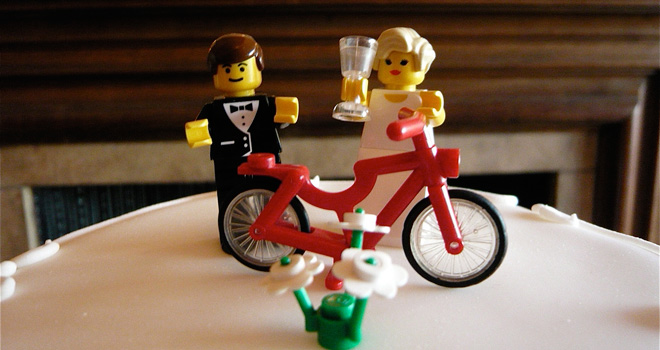
(By WordRidden via Flickr. Used under Creative Commons License.)

In no particular order, here are 12 lessons that we’ve learned (often the hard way):
Divide up household and family responsibilities according to each partner’s strengths.

I have a good sense of my strengths and weaknesses. I’m good with organizing and scheduling. I suck at ironing. I have the patience to help with homework and sit through two-hour soccer practices. I should never be allowed to handle power tools. I enjoy the research involved in managing the household finances. The thought of calling up a neighbor to confirm that we’ll be attending a party causes me to procrastinate for days and need a nap afterward.

If you’re lucky, you have a partner with some different strengths and weaknesses than your own. Dividing up the household responsibilities accordingly makes life easier on both partners and addresses one of the biggest potential pitfalls in an aspie-NT relationship: the tendency for the NT partner to feel like a caregiver rather than a spouse or a lover. If the aspie partner has some clearly designated responsibilities at which she excels, delegating her weak areas to her partner can feel less like a failing.

Successful partnerships are built on a rational division of labor and a marriage is no different.

Apologize when you do something that your partner finds hurtful.

This is true for both partners, but especially for the aspie partner. There are times when it’s hard for aspies to see why something is hurtful. Get over it. It doesn’t matter if what you said or did was unintentional. It doesn’t matter if you meant well. It doesn’t matter if you think it’s silly or meaningless. Just apologize.

I know this can be difficult. My first instinct is often to say, “but that’s not what I meant” or “what’s the big deal?” This is a bad idea. If your partner is hurt by your words or actions, then it is a big deal. Ideally, your NT partner will be able to calmly identify what you did and how that made him feel: “I feel hurt when you point out in front of other people that I wasn’t paying attention to the conversation.”  And then you can just as calmly consider his point of view and apologize: “I’m sorry. I didn’t realize that would bother you. I’ll try not to do it in the future.”

Obviously, having this conversation calmly and lovingly can be a hard place to get to. For a long time, my husband thought I had a mean streak. After learning more about Asperger’s, he began to understand that my AS wiring is responsible for a lot of the dumb stuff that comes out of my mouth. Now he tries to calmly point out when I’m being insensitive.

We’ve both realized that even when he tells me that something bothers him, I may still do that something again in the future. I’ll try not to, but there’s no guarantee because Asperger’s makes it hard to generalize from one situation to the next. There’s a good chance I’ll say something similar without realizing it’s hurtful, because in my mind it’s not the exact same thing. It takes a leap of faith for the NT partner to give the aspie the benefit of the doubt when this happens, but this kind of trust may be one of the things that saves your marriage in the end.

—–

In part 2: bad days, social skill deficits and touch sensitivity
Rules to Live By

When you have Asperger’s Syndrome, sometimes life feels one long “if . . . then” statement. If someone is crying, then they’re sad. If someone is sad, then they want a hug. If I give them a hug, then they might feel better.

From childhood I’ve been building up a database of if . . . then rules, hardcoding them into my brain through repetition. This is one of my core coping strategies for dealing with my Asperger’s on a daily basis. Without my if . . .then database, left to my own devices, I’d come across as much more autistic than I do.

If . . . then allows me to pass in an NT world. If . . . then gets me through most days without randomly offending people.

If . . . then, if . . . then, if . . . then.

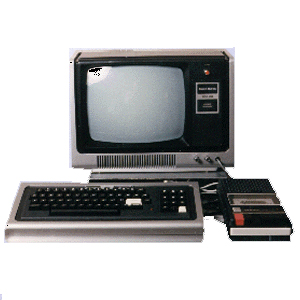
In high school, I took a computer class that consisted mainly of learning BASIC, the programming language that ran the TRS-80 computers that populated the new and mysterious computer lab. I immediately fell in love with the clean simplicity of computer code. Everything was accounted for. Everything was explicitly declared in the code. If it wasn’t, the computer balked. Computers don’t infer.

My first computer was a  Tandy-Radio Shack TRS-80 like this one. See that cassette player? That was the “hard drive.” Old school geekery.

How simple life would be if we had to declare everything up front. If every task and interaction had a neatly nested set of if . . .then statements to be stepped through.

I spent hours programming simple text games. If ‘yes’ then ‘turn right’ else ‘turn left.’ It was fantastically binary. The elegant addition of ‘else’ allows for choice, but only one. Turn right or turn left. Open the door or leave it closed. Each choice branching off in two directions, creating a tree of neatly predefined decisions.

If you’re thinking a few steps ahead, you’ve probably anticipated the roadblock my fourteen-year-old self ran up against. Working further and further down the tree, choices multiplying exponentially with each new level, eventually I would be overwhelmed by the possibilities and abandon the game I’d been so excited about an hour before.

If . . . then, if . . . then, if . . . then.

There should have been a lesson there, but I began again and again, erasing the tape that held the code and starting with a fresh scenario. You wake up to find yourself locked in a padded room . . .

The computer was apathetic. Each time I started over, it displayed the same blinking gray cursor. It lacked judgment or even any real memory capacity other than the one I allowed it to have.

There was a predictability in coding that was comforting. The choices were finite. As long as I thought things through, there were no surprises.

I tried imposing this kind of order on the rest of my life, but people seemed reluctant to be programmed. They liked unpredictability. They didn’t need to know how every minute of  the day would unfold to enjoy it.

They had their own sets of rules. They seemed reluctant to share them.

If . . . then, if . . . then, if . . . then.

I’ve always been more of an observer than a participant. I watch. I collect data. Patterns emerge. A rule forms. I catalog it. Apply it. Adjust, adapt, reformulate.

Watching is safe. Quiet is safe. This is one of the first rules I learned and it stuck in the way that few have since. If I’m quiet, then I’m not getting yelled at. If I don’t say anything, then there will be nothing for anyone to make fun of. If I watch carefully enough, I can figure out what the rule is here without having to ask and look stupid.

The rules kept me safe. They created a positive feedback loop, naturally rewarding me for following them and punishing me for deviating from them.

But over time, the rules boxed me in. There were rules for school, rules for work. Rules for marriage. Rules for motherhood. Slowly, unconsciously, my life narrowed, and narrowed further still. Like my game collapsing under the weight of exponentially growing options, the rules became more of a burden than a support.

I forgot about the elegant ‘else.’ Choice receded, rigidity crept in.

Breaking the rules was unthinkable. If . . . then. Stay within established parameters. If you can’t find a rule for it, avoid it. Breaking the rules causes dire consequences. So dire that they’re unknown.

If . . . then, if . . . then, if . . . then . . . else.

Understanding Asperger’s Syndrome has helped me rediscover the beauty of else. I have choices. The rules are malleable. I made them; I can unmake them.

The rules are supposed to serve me, not the other way around.

Editing the rules is hard, but I’m trying.

Many stay. They’re useful. Necessary. They’re how I pass. Offer someone a beverage when they visit your house. Leave an empty seat between you and another person on the train. Kiss your husband goodbye when he leaves home in the morning.

Some stay in spite of their apparent uselessness. They’re harmless. They give order to life. Always swim an even number of laps. The bowls face to the left in the dishwasher. Dry your hair first after showering. The blue towel is mine.

The bad rules get deleted, though not without a struggle. The house has to be spotless if guests are visiting. Items on the ‘to do’ list must be finished by the end of the day no matter what. Iced coffee has to come from Dunkin’ Donuts.

People gift me with the rules that I fail to intuit. When you say goodbye, look at the person you’re talking to, not the direction you’re about to walk away in. If you have something important to say, wait until you’re face-to-face to start the conversation.

New rules emerge, from conscious thought not patterns. Think before you automatically say no to a spontaneous change of plans. There is more than one right way to do something.

If . . . then, if . . . then, if . . . then.

I add, delete, overwrite, reorder, sort, categorize, refine. Rules that make my life easier. Rules that help me struggle less. Rules for order and rules for efficiency. Rules to create structure. Rules for navigation.

I develop if . . . then tests for the rules:

1. If a rule prevents me from making a spontaneous choice then it’s too restrictive.
2. If a rule negatively impacts someone I love then it’s probably doing more harm than good.
3. If a rule was created more than five years ago then I may have outgrown it.
4. If a rule makes me sad, angry, tired or anxious then I need to question its origins.

The rules continue to evolve. I’m learning to break the ones that need breaking. Sometimes that’s freeing. It leads to laughter, spontaneous joy, new discoveries. Other times: resignation, regret, disappointment, confusion, fear.

This is life.

Life is not a TRS-80. Life is a wondrous, messy, untamable process.

So here is my newest rule: worry less about the rules.

Be more authentic. Embrace my quirks. Trust myself.

Where I Go When I Shutdown

This is loosely related to last week’s post on flat affect. When I look blank or checked out, sometimes it’s because I’ve withdrawn or shut down.

—–

“You disappeared.”

When my husband said this to me, we were sitting in a restaurant waiting for lunch to arrive. It was the tail end of a great weekend at the beach and I was off in my own world.

Withdrawal. Shutdown. You’ll hear people with Asperger’s use different words for the disappearing act we perform under stress.

For me, withdrawal feels more accurate. The sensory input becomes too much. Too many people, too much noise, too many decisions, too little time to process it all.

Sitting in the restaurant, I felt the telltale signs of withdrawal creeping up on me. The first is a sudden heavy sleepiness. All I want to do is put my head down and close my eyes. Or better yet, curl up in a nice safe place and take a nap. Of course, the urge to withdraw almost always hits at at a time when a nap is impossible and there are no safe places nearby.

The second sign–the one that makes it clear I’m not just overtired–is the sensation of moving through a long tunnel. Everything around me recedes and grows quieter. I feel myself disconnecting from the conversation. It becomes harder to formulate responses and I have no motivation to initiate any interaction.

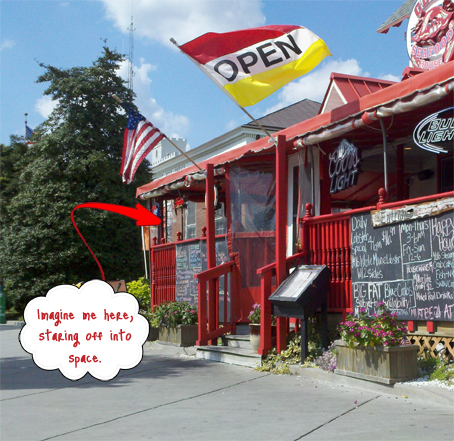
Once I’ve drifted far enough into the tunnel, I’m quite content to sit and stare off into space, detached from everything that’s happening around me. I feel invisible.

Cumulative Stress

My withdrawals are almost always triggered by cumulative stress. The morning leading up to that lunchtime withdrawal was marked by a series of little frustrations. On any other day, I would have simply rolled with them, but I think two days of being in an unfamiliar environment was silently taking its toll.

The scene of my latest shutdown

Suddenly the music in the restaurant was too loud, the sun was too bright, I couldn’t tune out the conversations at the tables around me, the menu had too many options, none of which looked good. Sitting half in the sun and half in the shade, I was too cold and too hot at the same time. Every time I looked up, the guy at the next table quickly looked away–and I think that was the last straw.

Lately I’ve been thinking a lot about why I frequently catch people staring at me, often repeatedly over the course of a meal or a train ride. So off went my perseverative brain, puzzling over that question again. Then–bam–the sleepiness rolled in and next thing I knew I was slipping into the tunnel.

Going Offline

Contrary to how it must look externally, when I’m withdrawn I’m not sad or depressed. Sometimes a withdrawal is triggered by anxiety but sometimes it’s triggered by having too much fun. Whatever the trigger, a withdrawal is always the result of being overwhelmed.

Once I’ve disappeared, though, the dominant feeling is one of comfortable blankness. Relief.

Withdrawing or shutting down is obviously a defense mechanism. My brain decides that the processing demands of my environment have become too high and it takes some resources offline for a while. The withdrawal itself is restorative, a sensory timeout, but it’s not voluntary and even when I know it’s happening, there’s little I can do to stop or control it.

I’ve been thinking about that a lot. Do I need to control it? Do I want to? Ideally, it would be nice to delay a withdrawal to a more convenient time, like during the drive home instead of in the middle of lunch. I’m not sure if this is possible. The urge to withdraw is a strong and physical, more like being hungry than being sad. I can talk myself out being sad, but being hungry only goes away if I eat something.

Looking at a withdrawal as a physical need makes it easier to see that it’s not something I can simply distract myself from. Still, I hate the idea of feeling helplessly ruled by my body. Maybe the answer lies in what comes before the withdrawal, that series of little frustrations made worse by being out of my element.

I’m getting better at managing unexpected change. I’m slowly learning to embrace the unfamiliar. I’m becoming more mindful of the ways my physical comfort affects my emotional shifts. But perhaps I’m still too good at stuffing down the negative emotions, the little discomforts and anxieties that don’t feel important enough to waste energy on.

Resurfacing

Normally if someone tries to engage me in conversation when I’ve shut down, all they get are monosyllabic answers. When my husband asked, “where are you?” my nonanswer was “why?”

He paused  a moment, probably wondering if he was doing the right thing by confronting the situation head-on and then he said, “You disappeared.”

That simple acknowledgement of what I was experiencing helped me re-engage with him. We’d never talked about my withdrawals before. My husband has always, I think, assumed they were simply “bad moods,” something to be ridden out and ignored.

They’re more than that, and now he has a better understanding of not only where I go when I disappear but how I feel and why it’s not entirely a bad thing.

Asperger’s and Motherhood (Part 6)

This is the final post in a series about being a mom with Asperger’s.

There’s some question about how having a parent with Asperger’s affects a typical child. I definitely see ways in which my aspie behavior has influenced my daughter’s behavior. She’s told me stories about how friends at college or colleagues at work have pointed out deficiencies in her social skills. Although she’s a very empathetic, compassionate person with a high emotional IQ, she occasionally does things that others consider thoughtless.

Recently, Jess was talking with a friend who was discouraged by his job search progress. Her response was much like mine would have been. It’s a tough job market for new graduates and you just have to keep at it. When he expressed his frustration at how unsympathetic she was being, she realized that she was saying to him what I would have said to her.

Although she understands social nuances, she sometimes chooses not to “play by the rules” because she’s seen how a less conventional approach has affected her at key points in her life and she finds some value in it that is probably hard for people raised in typical families to relate to.

She’s also related stories to me where she was shocked to find out that other people thought she was being rude–for not sharing a birthday treat, for example. These were instances where she simply didn’t think about what the right thing to do in that situation was. More than one person has attributed these faux pas to her being an only child, but I think it has more to do with my AS than her lack of siblings.

So you can see where being an aspie mom is going to result in your kids picking up some socially unacceptable habits, no matter how hard you try or how socially adept they seem to be.

Having an NT partner or spouse can go a long way toward helping you “mind the gap” when it comes to parenting. My husband is everything I’m not when it comes to social skills. He’s naturally compassionate, outgoing, empathetic, and confident. He can walk into a room full of strangers and strike up a conversation with anyone. People instantly love him. When it comes to our daughter’s social skills, I give him 100% of the credit. He modeled behaviors for her that don’t come naturally to me and that I’ve never learned to fake well.

As parents, we haven’t always seen eye-to-eye. There were times when he thought I was being too cold-hearted and there times when I thought he was being too sentimental. We’ve had to compromise on some issues and agree to disagree on others. We’ve both made mistakes. But we’ve also come to realize that we have our own strengths.

When Jess needs sympathy or relationship advice, she usually talks to her dad. When she needs help filling out forms her new job or fixing her computer, she calls me. She intuitively worked out what we can each give her as parents long before any of us knew what Asperger’s was.

That’s the thing about moms with Asperger’s and their kids: they know how to adapt.

The One Where the Aspie Rants About Empathy and the Experts

I just finished watching an educational DVD that was supposed to provide “simulations” to help parents and teachers develop empathy for kids with Sensory Processing Disorders.

And now I’m annoyed.

A sampling of the simulations on the DVD:

  • walk toe-to-toe with your eyes closed to simulate vestibular dysfunction
  • search for an item in your purse with your eyes closed to simulate tactile dysfunction
  • do chair push-ups to simulate proprioceptive dysfunction (huh?)
  • play charades to simulate . . . I don’t even know what the point of that one was except maybe to give one of the participants the chance to make the brilliant observation, “I know that reading facial expression is so hard for kids with autism.”

Oh, the empathy! I feel better already.

I probably could have overlooked the poorly designed exercises and been happy with the tips I picked up on dealing with sensory dysfunction, except for two things. The class of occupational therapy students demonstrating the simulations giggled their way through most of the exercises like they were party games and at the end the instructor wrapped with, “Now that you have felt what it’s like to have a sensory processing disorder . . .”

To which I shouted back, “Lady, you have no fucking clue!”

The simulations on the DVD were the equivalent of closing your eyes for thirty seconds and then thinking you know what it means to be blind.

Caution: Stunts performed on a Closed Track by Expert Aspie

What would the simulations look like if someone who actually knows sensory dysfunction feels like designed them? If that someone happened to be an angry autistic woman who’s had too much coffee, they’d look like this:

Proprioception* dysfunction simulation #1: Welcome to class! Let’s get started with the exercises. As you go to take your seat in the classroom, miscalculate how far you are from the first desk in your row, catching your thigh on the corner of the desk and knocking your classmate’s pen and water bottle to the ground. When you bend over to help him pick them up, bang heads with him. Ignore his exasperated sigh and pretend that every single person in the room isn’t either staring at you or carefully avoiding staring at you.

Proprioception dysfunction simulation #2 (bonus take home exercise): Pick a morning when you’re late for work. As you get ready to head out the door, grab your coffee mug with enough pressure to get it off the counter, but not enough hang on to it. Curse loudly as it crashes to the floor in a mess of shattered ceramic and hot liquid. Curse some more as you cut yourself cleaning up the shards of ceramic (damn you, fine motor coordination).

Repeat daily. Let me know when you’re ready to start adding in the other 6 areas of sensory dysfunction.

Now That I’m Feeling Less Ragey . . .

. . . I’ll try some constructive criticism.

This DVD felt like a misguided attempt at turning SPD into an “experience” to build empathy in OT students. While the sentiment is admirable, I think the big danger is that once someone assumes they know what another person is experiencing, they stop listening.

Perhaps that’s why the creator of this DVD failed so miserably with the simulations portion of the program. If she’d run it by a few adults with SPD, I’m sure the exercises would have looked different. Even better, she could scrapped the simulations altogether and devoted that portion of the program listening to adults and children with SPD talk about what it’s like to have a hypersensitive tactile response or hyposensitivity to pain.

Yes, the instructor on the DVD has an OTR/L after her name. That makes her an expert in occupational therapy, not in having an SPD. A five-year-old with an SPD is more of an expert in what that feels like than an adult with a dozen letters after his or her name.

As someone who struggles with mild to moderate sensory integration issues, I don’t think it’s possible to create exercises that replicate that experience for neurotypical people. And if the goal is to create empathy for people with SPD, I think there are better ways of going about than a few minutes of engaging in a botched imitation of what it might be like to live with SPD.

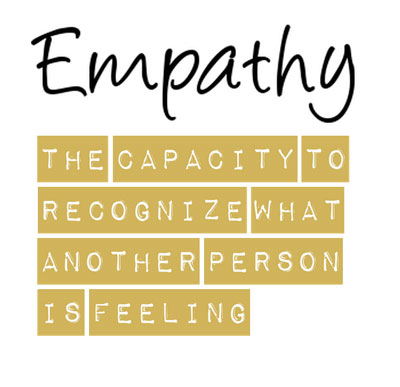
Empathy is “the capacity to recognize what another person is feeling.” Nowhere in that definition is there a requirement to experience first hand through simulations what the other person is feeling. To recognize what someone is feeling, I’ve found it’s helpful to ask questions and listen carefully to the answers.

As exercises go, it’s a simple one.

And yes, this is the aspie giving advice on empathy. Go figure.

—–

*Proprioception refers to your awareness of the position of your body. You can find a great summary of what types of activities might be beneficial for improving proprioception and other physical attributes in children with autism at Physical Exercise and Autism fact sheet. You can find some examples of therapuetic activities for kids with SPD at Activities for kids with sensory processing disorder.

You Scare Me

Last summer, my husband and I had some new friends over for lunch. They brought along their two young boys. Toward the end of the meal, the 5-year-old, who was sitting next to me, looked at me and said, “You scare me.”

This was pre-Asperger’s, so like everyone else at the table, I laughed it off as one of those inappropriate things that kids sometimes say.

Still, his comment stayed with me. I couldn’t figure out what I’d done to scare him. He was a friendly, talkative little boy. I’d showed him how to get my dog to do a couple of simple tricks and had given him some bits of hot dog to use as treats. I’d asked him about his swimming lessons and whether he wanted a dog of his own. I’d cooked him a cheeseburger so he wouldn’t have to eat the fancy grown-up food. He’d even chosen the seat next to me at lunch. I thought we were getting along great!

And then, out of nowhere, he told me that I was scary. I was more puzzled than offended, but there was something about his comment that really stuck in my head. Sometimes when I’d catch people staring at me in a restaurant or a store, his words would come back.

You scare me.

Why?

A Hard Truth

Months later, I was sorting through boxes of photos and it hit me. There it was–there I was–staring back at myself from photo after photo with the dreaded flat affect. Since they say a picture is worth a thousand words, here’s how a flat affect looks:

And to prove that wasn’t just me getting caught at a bad moment, here’s one I actually posed for:

Smile! Or not . . .

These pictures are hard to share. I don’t like looking at them. In fact, I almost never like looking at photos of myself. If I don’t have a blank expression, I tend to look like I’m faking a smile or making an uncomfortable, when-is-this-going-to-be-over expression.

As I was sorting through twenty-plus years worth of photos before we moved, I found dozens or maybe hundreds of pictures of myself with some variation of a blank, checked-out expression. I don’t know why I hadn’t seen it before but there it was. Standing in front of the Christmas tree. Attending a wedding. On vacation.

One after another, I tossed them in the trash bag on the floor beside me, tired of looking at this woman who was starting to scare me.

Flat Affect

From my reading about Asperger’s I was aware of the difficulty aspies have in reading facial expressions, but it hadn’t occurred to me that I don’t project appropriate facial expressions–or sometimes any expression at all.

The technical term for this is flat affect, which means that a person displays reduced emotional expressiveness. It takes a five-year-old to put it in plain English though: you scare me.

Looking at those photos, hundreds of them in a row, for hours on end that afternoon, I finally answered the question why? Flat affect is unsettling to others–it makes me look bored, angry, sad or spaced out at inappropriate times.

To a five-year-old, who is probably relying more heavily on nonverbal than verbal communication to judge adults, my inappropriate or absent expressions were creating mixed messages. Though I was saying and doing “nice” things, the nonverbal expressions I was projecting weren’t the typical “kind, caring adult” cues he was expecting to go with my words and actions.

Maybe I Can Learn to Fake It?

The disconnect between my expressions and thoughts is frustrating. Not only do I have trouble verbalizing my emotions but my face keeps wandering off on its own and freelancing.

More than once I’ve had a professor pause during a lecture to ask me if I had a question. One day, curious about why this happened so often, I finally said, “No, why?”

“Because you’re frowning,” the professor replied.

Surprised at his reply, I blurted out, “I’m not frowning. This is my concentrating face.”

The rest of the class laughed, but the question was right up there with you scare me in how deeply it unsettled me.

Obviously I was projecting something different from what I was experiencing internally. There I was sitting in calculus class day after day, looking confused, but never asking any questions. This made my professor so uncomfortable that he stopped in the middle of his lecture to ask me what my problem was. I wonder if he even believed me when I told him I wasn’t confused.

I wonder how often people think I’m being deceitful because my verbal and nonverbal communication doesn’t match.

This is a problem that feels too pervasive to fix. I’m literally projecting an expression of some sort during my every waking moment. There’s no way I could–or would even want to–pay attention to what that expression is all the time.

There are also plenty of times when my expression does agree with my disposition, especially when I’m genuinely happy.

Here’s a photo taken around the same time as the above two shots, except in this one I was truly happy and look it:

Since that exchange with my calculus professor, I’ve occasionally tried projecting a specific expression. In class, if I noticed a professor glancing in my direction too often, I assumed that I was doing the confused face and tried put on my “interested but neutral” face. I also made sure to nod a lot, a reassuring sign to NTs.

It seemed to help–it at least reduced the number of concerned looks in my direction–but I’m not very motivated to do this on a regular basis. I’ve seen other aspies talk about how acting lessons or practicing in a mirror helped them overcome flat affect. I admire their commitment to doing this–it sounds like it would take a lot of time and practice to get right.

Then again, if I had a job that required a lot of contact with the public, I might have the motivation to put more effort into improving the type of nonverbal cues I project. Maybe somewhere down the road it will be something I’ll decide to try but for now, I’ll just go on scaring small children and bewildering acquaintances.

Asperger’s and Motherhood (Part 5)

This is the fifth in a series of posts about being a mom with Asperger’s.

As adolescence drags on–yes, some days it feels like it will never end–you may run into some serious challenges. The child who thought you were the coolest mom on Earth suddenly thinks you’re a moron. She doesn’t miss a chance to remind you that you can’t do anything right. That you know nothing. That you’re uncool and out of touch.

These words–and worse, the way they’re carelessly hurled at you–may hurt, but don’t panic. Teenagers all over town are saying the exact same thing to their NT moms and dads. Congratulate yourself on being a perfectly normal parent.

But the wild mood swings, sarcasm, unpredictability and sometimes downright meanness of teeangers can be especially hard on aspie moms. You may not be the most confident mom. Sarcasm, irony and biting humor might go right over your head, making you feel dumber than a box of rocks as your teen patiently explains the joke. And if you’ve shared your diagnosis, don’t be surprised if your teen decides at some point to use that against you. Teenagers are masters of dirty fighting. If it wasn’t your AS, it would be some other vulnerability, so again, you’re no different from the other moms.

Just like when you had that squalling little newborn, this is the time to call in reinforcements. At times you may need to turn over a challenging aspect of parenting to your child’s father, a grandparent or another safe supportive adult in your child’s life.

Don’t be afraid to ask for help if you feel like you’re in over your head. Teenagers can find themselves with adult-sized problems and because of our issues with executive function, we aspies may not always be the best source of guidance when a major crisis occurs. As a parent, you want the best possible outcome for your child, but as an aspie, you may not always be able to work out how to help him get there.

And for everything–big and small–that AS causes you to struggle with as a parent, I guarantee there’s something else that AS will make you amazing at. Your teenager will scoff at your poor fashion sense, but you may be the only one in the family cool-headed enough to teach her to drive without getting into a shouting match at every rolling stop and crooked parking job. And those research skills you’ve developed pursuing your special interests will come handy when it’s time to find the right college (or a good defense attorney).

My daughter’s friends found it amusing that I would spend hours trying to master the Playstation skateboarding tricks that they taught me or that I didn’t care if they wrote all over the wallpaper in her bedroom. More than once I heard the words “your mom is cool” whispered as I left the room.

Still, it wasn’t always easy having kids, and later teenagers, in the house, especially if the visits were unplanned or didn’t have a defined end to them. Even if you’re okay with the noise and mess that teenagers bring into your home, you may find the uncertain nature of their visits hard to handle. I spent a lot of evenings on edge because of the general anxiety caused by having extra people in the house, but I learned to put up with as much as I could, because I knew it was important for Jess to be able to invite friends over and have a relatively normal social life.

If your teen is sympathetic, it may help to sit down with him and discuss why certain ground rules are important to you. For example, if you need a quiet, safe place to escape to, it may be important for you to not have anyone upstairs where you can hear them when you retreat to the sanctuary of your bedroom. Perhaps you need the kids to clean up their messes or not cook foods with strong smells. Visits may be more tolerable if your teen limits her guests to just a couple and respects your need for the visit to end by a specified time.

As the parent, you still have a lot of control over what happens in your own house, even as your children approach adulthood. While asking your teen to make accommodations for your AS might mean that the rules at your house are stricter or stranger than those at her friends’ houses, those rules might be the difference between you being able to enjoy having your teen’s friends in the house or dreading it.

Next in the series: Am I contagious?

How Asperger’s Taught Me to Hate the Phone

What is it about Asperger’s that makes talking on the phone so anxiety-inducing?

When someone says “I’ll call you” my first reaction is what can I do to make that not happen? This is especially true of social calls, the kind that many women think are a pleasant way to connect with a friend. Business calls are slightly less stressful because they have a goal and I can formulate a script ahead of time that will get me to that goal. Assuming the call goes mostly to script and is short, I can power through it.

But why should something as simple as phone call require “powering through” like it’s the social equivalent of an Ironman triathlon?

Hello?

The phone should be an ideal means of communication for someone who isn’t good at reading body language or making eye contact. All you get over the phone is a voice, right? Communication distilled to its essence: words.

It turns out this isn’t exactly true. Unlike written communication, which is truly nonverbal, phone conversation relies heavily on prosody (the rhythm, stress or intonation of speech). Prosody often conveys the emotional content of language or signals the presence of irony, sarcasm, emphasis or contrast.

Suddenly this one aspect of speech looks pretty important, doesn’t it?

If you can’t interpret prosody, you don’t get certain types of humor, you miss the subtle emotional shifts in the conversation, you fail to recognize which details are being emphasized. That’s just on the listening end. If your own speaking voice lacks prosody–a common trait with Asperger’s–your conversation partner will probably feel ill at ease too.

This explains a lot about why my phone conversations are often punctuated by:

“No, you go ahead.”

and . . .

“What were you going to say?”

and the much loved:

“Are you still there?”

I have a tendency to pause for too long before my turn to speak, which makes the other person anxious. He or she will start speaking again, often right as I start to reply to the previous comment or question. This results in a lot of false starts, interruptions and awkward, “no you go first” encouragement.

The Delicate Balance Between Knowing My Limits and Limiting Myself

If I know that these ill-timed pauses are the problem, why don’t I do something about it?

Good question.

Sometimes I miss the little cues, like a change in intonation, that indicate the other person has finished their turn and it’s my turn to talk. Sometimes I’m using that long pause to collect my thoughts or compose a reply. If the conversation is particularly unstructured, I may start to drift off and lose track of it altogether. Unexpected questions can leave me tongue-tied. In the worst case, I might have no idea what the other person said–at times words sound more like noise than language.

When I first saw the question “do you dislike talking on the phone” on an Asperger’s Syndrome screening questionnaire, I was mystified (and more than a little relieved). Did Asperger’s cause people to dislike the phone? What a strange and specific condition this is, I thought to myself.

After much reading and thought, I’ve realized that Asperger’s itself doesn’t make me dislike the phone. Plenty of people with AS don’t mind the phone at all. What makes me uncomfortable (with all but a few people who I know well) is the cumulative effect of a lifetime of stumbling encounters.

I’m realizing that much of the anxiety I have surrounding social communication has formed in this way. I struggle with processing some aspect of communicating, the negative experiences pile up, and in time I find myself avoiding situations to avoid what I’m certain will be more negative experiences.

Intellectually, I know that I’m creating negative feedback loops, but emotionally I find myself on the defensive, wanting to protect the comfortable bubble I’ve created. I teeter back and forth between seeing the importance in knowing my limits and questioning whether those limits are too . . . limiting.

At some point, I know I’ll have to face this conundrum in a more organized way but I also know that I’m still learning what my limits are and how they protect me and that’s enough for now.

Happiness, Aspie Style

“Are you happy?”

My gut reaction to this question is usually, “I dunno. I guess so.”

Before you assume that I don’t know if I’m happy because, duh, I’m an aspie, let me explain.

Happy is one of the blandest words in the English language. Think about it. Are you happy? Did you reflexively say yes? Did you have to stop and consider your answer?

Okay, how about this: Are you elated?

I bet you didn’t have to think very hard about that. The word elated is as precise and loaded with meaning as happy is vague and amorphous.

Putting emotions into words is tough for aspies. Maybe a big part of the problem isn’t our Aspergarian nature so much as the words we settle for. Happiness encompases a whole constellation of positive feelings from contentment to ecstasy, but when I think about “happy” all I have is a blurry splotch of a feeling.

Elated, on the other hand, has a very specific shape for me–elated is riding my bike down a hill at top speed, the wind whipping my shirt, the road a blur beneath me, and I can feel a shout building in my chest that makes me want to throw my head back and close my eyes and let out a crazy loud laughing shouting whoop of joy.

Constellation of Happiness

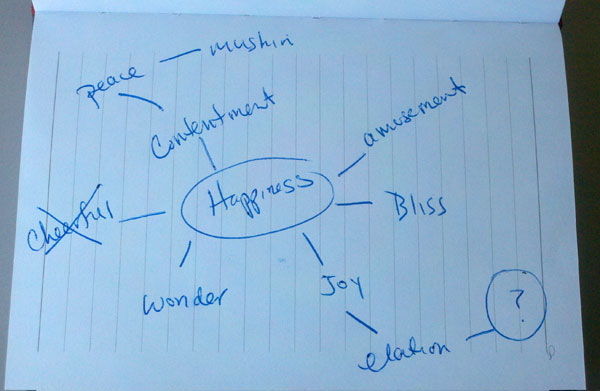
Thinking about all of the different words that make up my constellation of happiness led me to map them out on paper:


Contentment is where I spend the most time. If I had to pick a default state, this would be it. Contentment is curling up on the couch with a good book, holding hands with my husband on our evening walk, watching a hawk circle overhead, the feeling of flannel sheets, seeing the sun rise on a fall morning, digging my toes into the sand at the beach, pulling on my favorite t-shirt.

One level up from contentment is peace. This is the place I most like to be. When I’m in a peaceful place, I feel a deep sense of quiet in my mind and body. Everything about the world feels right–in sync, wide open, infinite. That peacefulness almost always fills me when I’m outdoors–hiking, running, swimming, walking the dog–away from people, soaking up sunshine, covering distance, moving.

Beyond that feeling of peace is mushin (empty mind). This is the place where conscious thought doesn’t exist and everything simply is. You either get this or you don’t and no amount of explaining will change that. I hope you get it. To realize that you’ve been in a place of no thought is a stunning, rare, ephemeral kind of happiness.

Cheerfulness. I barely finished writing the word before I crossed it out. Not because I lack the ability to be bright and cheerful but because I so often seem to be cheerful at the wrong time, which sometimes provokes negative reactions, especially from strangers. People get a little freaked out when you’re overly happy for no apparent reason.

Going completely against the stereotype of the humorless aspie, I’ve put amusement in my constellation because I love humor. Yes, I sometimes miss a joke and my sense of humor can be odd, but I love sitcoms, stand-up, cartoons, sarcasm, puns, wordplay, and satire. I laugh often and loudly. In fact, now that I think about it, I like how laughing feels. There’s a ticklish sort of release to laughter that you can’t get any other way.

There road to bliss runs through desserts made of chocolate, good sex or a long run on a beautiful day. Bliss defies capture. It’s boneless, languid, unbound.

Wonder is a silent feeling, a sense of being awestruck. It’s always unexpected and strong. Pure, childlike, fleeting. It’s seeing the sun hitting an ice-coated world after a winter ice storm. It’s driving around the bend of a mountain and having the landscape suddenly open onto a lush green caldera. It’s emerging from the woods to discover a herd of elk grazing in a meadow.

I was on the fence between joy and excitement, but I settled on joy. Excitement has an edge of anticipation that pushes it out of the happy constellation and into the constellation of anxiety. But joy is purely positive. Joy is light and sparkly, like an unexpected string of holiday lights on a balcony in July. Joy is my daughter calling to tell me about something great in her life. Joy is the smile on my husband’s face when he sees me coming to meet him on his walk home from the train. Joy goes hand in hand with love for me. It never rises up alone like wonder or peace.

Elation is joy2. It’s that whooping, running, rush of feeling I described at the beginning. It’s more physical than joy but less physical than that feeling without a name that I’ve drawn as ? in a circle on my constellation. If elation is joy squared then the unnamable feeling is joy1000.

The unnamable feeling is entirely physical. It makes me want to bounce up and down, skip down the street, twirl in circles. I think this is a uniquely autistic feeling and maybe that’s why I can’t find an appropriate name for it. If it were possible to distill happiness down to it’s purest, most potent form, it would be this unnameable thing that occasionally takes over my body and makes me feel like I’m flying.

Feelings or Feeling?

Reading back over what I’ve written, I’m struck by how much of my emotions I describe in physical terms. I can associate specific physical sensations and events with all of these emotions. For the stronger emotions, the physical sensations can verge on overwhelming. Extremely positive emotions demand to be released through some sort of physical activity, while the calmer positive emotions bring a sense of internal quiet and physical stillness.

I wonder if this is true for neurotypicals. Do feelings literally translate into feeling something physical or is this unique to those of us on the spectrum? When I look up “feeling” in the dictionary, the definition related to emotions tells me that it’s an “overall quality of one’s awareness.” That sounds rather boring.

I’d much rather think of feelings as things that can be physically felt, brilliant as a shiver of cold on a clear winter night.

More Constellations to Come

I’m not sure if this helpful to anyone but it was fun to do. Oh, I forgot to put fun in my constellation! I suppose I forgot a bunch of other feelings, too. I’ve never really given a lot of detailed thought to how my emotions manifest themselves. Just the act of naming them and associating them with events, memories and feelings has been really enlightening.

There are at least two more constellations I’d like to try: sadness and anger. Disgust, fear and surprise supposedly round out the six basic emotions, but they look trickier to diagram. Perhaps after I’ve tackled sadness and anger I’ll be ready for the rest.

A Postscript

I gave this entry to my husband to read and one of his reactions surprised me. He asked if writing something that made me seem this happy would make some readers question whether I’m really an aspie.  Perhaps. The stereotype of the emotionless autistic person is a strong one. I hope this piece helps to refute it in some small way.

Asperger’s and Motherhood (Part 4)

This is the fourth in a series of posts about being a mom with Asperger’s.

If your middle school years were anything like mine, you may find yourself dreading them on behalf of your child. Middle school is an awkward time, at best. For many adult aspies, it was the time when our differences started to become very obvious to ourselves and worse, to our peers.

If your child isn’t an aspie (or even if she is), she might have a much easier time of middle school than you did. Try to be neutral about what she can expect as she prepares to make that transition and don’t be surprised if your neurotypical kid is more successful than you were.

Even if your son or daughter suffers only the usual trials of puberty and adolescence, you should be prepared for how the milestones during these years might affect you. It’s possible that your child’s first day of middle school might go great for him but end up triggering an anxiety-induced meltdown for you. Your daughter’s first school dance, big game or sleepover party may bring up memories of your own early adolescence that you’d rather forget.

When I felt this happening, I tried to remember that my daughter was a very different child than I had been. She had her own adolescent anxieties and the last thing she needed was for me to impose my own issues on her. When a crisis arose, I did my best to listen and try to understand what she was facing. This is a big challenge for aspie moms. First of all, we tend to assume that everyone thinks like we do. Empathy is one of the hardest NT qualities to “fake.” We also have a tendency to want to fix stuff when often what our kids needs in a crisis is compassion, understanding and reassurance. And love.

If you find that empathizing is a challenge, practice listening quietly. Then ask “how can I help?” or “is there something I can do that would make you feel better?”

If you have the benefit of a diagnosis, consider sharing that with your adolescent child. Disclosure is a complicated subject and each family handles it differently.

Most experts agree that a middle school age child is old enough to understand the basics of what AS is and how it makes you different from the average mom. Middle schoolers are also old enough to be asked to make simple accommodations, like telling you as concretely as possible what they need or want from you if you’re having trouble figuring it out. Of course this isn’t ideal–at times your child may protest that you’re the mom and you just know this stuff.

There are nuances to social interaction that are lost on aspies and one of them is the idea that knowing what someone is feeling suggests a higher level of caring than having to be told. This is a good opportunity to remind your child that you do care about him and that’s why you’re asking for some extra help in understanding what he needs or wants from you. Also, try to remember that all parents struggle when it comes to figuring out their adolescent children.

The middle school years also bring intense peer pressure. Being raised by an aspie mom seemed to inoculate my daughter against peer pressure to some degree. I’ve always been obliviously, even proudly, different from my peers. Peer pressure doesn’t have a lot of effect when you’re used to being on the outside looking in at your peer group. While this wasn’t something we ever talked about, I think my attitude rubbed off on Jess in positive ways. She’s always been very individualistic and even today she takes the view that if people don’t like her for who she is then it’s their loss.

Next in the series: Lurching Toward Adulthood

one woman's thoughts about life on the spectrum