
This is the 4th part in an ongoing series about being diagnosed as autistic at the age of 42.
Mourning the Loss
Eventually reality set in. I’m autistic.
Not the happy “Yay! I’m different! I’m unique! I’m special!” autistic.
More like “Holy crap . . . I’m defective . . disabled . . . challenged . . . never going to get any better” autistic.
This was when the mourning began. Once the bright shiny new this-explains-everything stage wore off, I started thinking about the other side of being autistic. I wasn’t going to “outgrow” my social awkwardness. I wasn’t going to wake up one day and suddenly have a balanced emotional life. The challenges I faced weren’t imagined and they weren’t going to magically disappear. They were with me for life.
This is me. This is always going to be me. Forever.
Talk about hard realizations.
The questions that arose were mostly variations of “how would my life have been different if I wasn’t autistic?” As I tried to envision taking away this or that autistic part of me, it became obvious that Asperger’s was responsible for a lot more than what makes me weird. It’s responsible for many of my strengths, too. Take it away and I’m no longer me.
That person I was mourning? She doesn’t exist.
Mourning the Loss
- Don’t be afraid to acknowledge your anger, disappointment, sadness or other negative feelings.
- Recognize your strengths along with your weaknesses.
- You’ve always been autistic and always will be. However, that doesn’t mean you can’t work on learning social skills, developing coping mechanisms or changing your lifestyle/environment in ways that support you.
Healing the Child (or Younger Self)
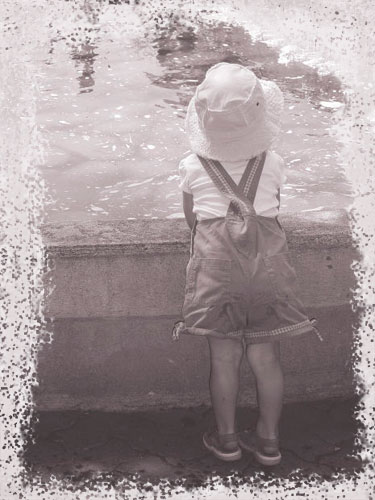
Growing up undiagnosed is hard. There is a lot of pain that comes from knowing that you’re different but not knowing why. Asperger’s gave me an explanation, but more importantly it gave me a starting point for healing that scared, confused kid inside me.
As I worked back through the more difficult aspects of my childhood, I felt like I was somehow mothering my younger self–revisiting each moment, looking at it in a new light and telling that younger version of me that it wasn’t my fault, that I’d done the best I could, that to expect more from me in the absence of support would have been unreasonable.
I wasn’t “obviously” autistic as a child–girls manifest ASD traits differently than boys in many cases and Asperger’s didn’t exist as a diagnosis in the 1970s.
I was, however, a handful. I was overly smart, easily bored, very curious and constantly in motion. Consequently, I got a lot of guidance from adults on how to behave properly. This reined in my more problematic behaviors, but it also made me feel like I was forever in danger of doing something “wrong,” especially when I “wasn’t trying hard enough.”
Being able to look back at my childhood and see that my behaviors were a result of my brain chemistry and not a result of “not being good enough” allowed me to begin to heal some of those lingering insecurities.
Learning more about Asperger’s helped me understand that I was bullied not because I was weird, but because I was socially inept. Reading about selective mutism gave me an explanation for my largely silent elementary school years–the ones where I never spoke in class unless forced to. Finding information about how ASDs manifest in girls shed light on why I had so much trouble maintaining friendships.
Each new bit of information absolved me of some perceived failure as a child and helped me begin healing some very old wounds.
Healing
- Learning more about Asperger’s/autism in children can help you understand challenges you faced in childhood.
- As an adult, you can choose to forgive the people in your life who hurt you as a child.
- It may help to imagine your adult self sharing your new information with your child self as a way to offer comfort or explanations for unhealed childhood wounds.
- If you find yourself having distressing reactions that are difficult to cope with, consult with a mental health professional or a trusted friend/mentor for help.
Coming next: Self-Diagnosis or Professional Diagnosis

 Musings of an Aspie