All posts by musingsofanaspie

Combat This

The Combating Autism Act (CAA) is up for re-authorization in the US Congress and ASAN is asking autistic people and their families to let Congress know that the CAA needs to be reformed. If you can want to know more, you can read ASAN’s message. There is a Twitter campaign taking place today and a flash blog next week to raise awareness and encourage people to contact their congresspersons in Washington.

Because I’m a bit of a wonk, I read the CAA last night and then I read the GAO’s report on the CAA. Fun times. One thing that struck me is how autistic adults, if they’re mentioned at all, always come last. When it comes to autism policy and research, we’re barely an afterthought.

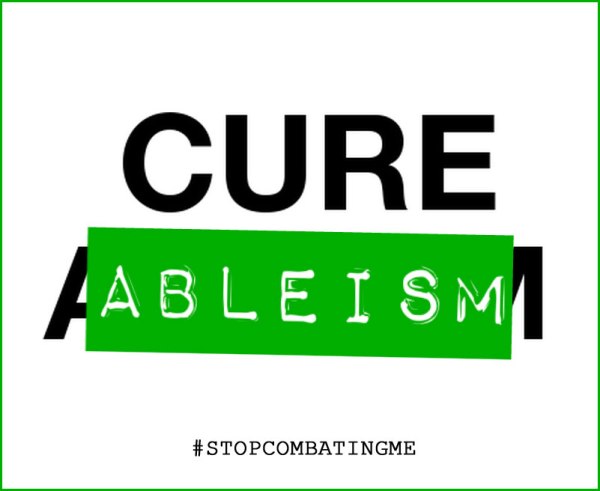
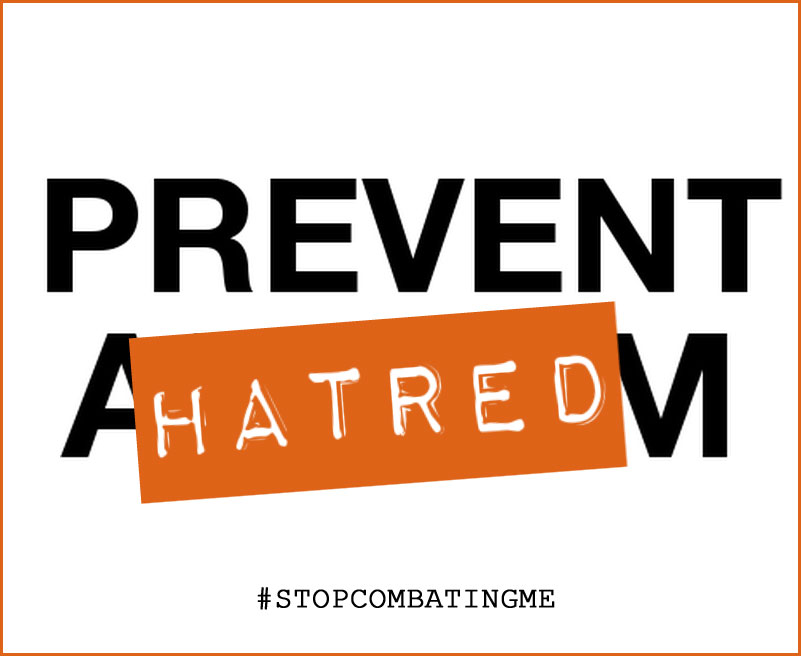
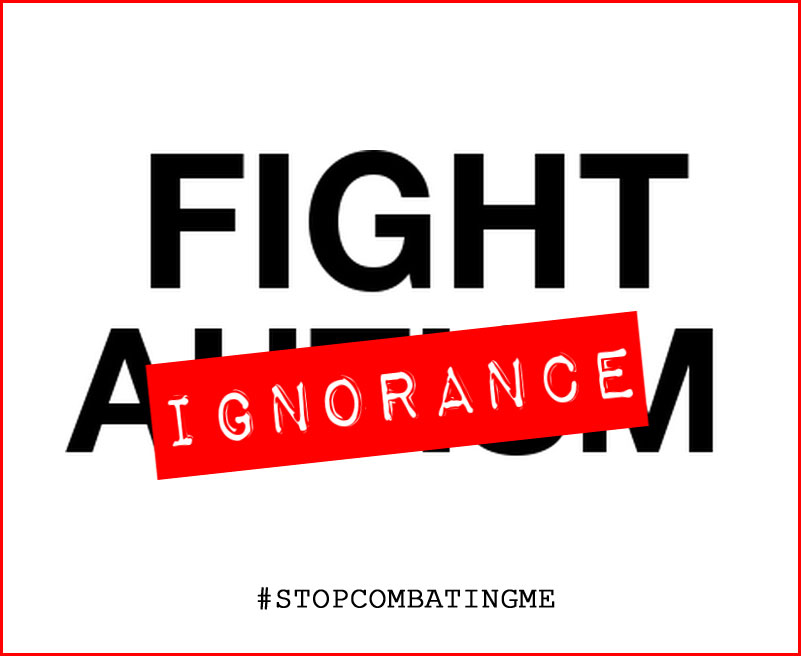
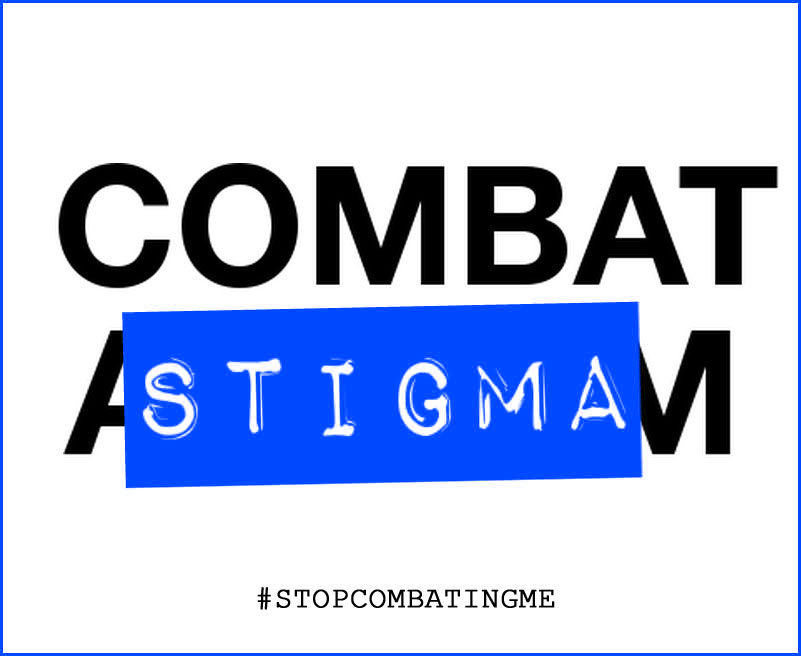
But that’s not really what this post is about. The theme of the actions around the CAA is #stopcombatingme, a reference to how damaging the language we use in the “fight against autism” can be. So I decided that for the flash blog, I would fix some of the common autism slogans.

stop_stigma2

stop_ableism

stop_hatred

stop_ignoranceThere. Fixed it.

Taking the Cognitive Style Test

Take a Test Tuesday is back! It’s hard to believe it’s been more than a year since the last Take a Test Tuesday post. In that interim some new tests have popped up online that look interesting so I thought it would be fun to bring back the Tuesday posts for a few weeks. So let’s get started.

This week I took the Life Experiences and Your Cognitive Style test at the awesome Test My Brain website. The tests at Test My Brain are all part of ongoing research, so by taking them you learn some interesting tidbit about yourself and you get to help researchers answer important questions.

The question that this test is trying to answer appears to be how does childhood trauma relate to impulsivity and attention difficulties later in life? This idea has been floating around for nearly a decade. It’s unclear whether adult ADHD may be linked to traumatic childhood experiences or childhood trauma can cause symptoms similar to ADHD in adults. If you want to read more about the research that’s been done on that topic, this article has a lot of links.

The reason this test got me all excited is because the first part of it is a shorter version of the ADHD test that I took during my Asperger’s assessment.  Continue reading Taking the Cognitive Style Test

I Am Not Temple Grandin

Recently, while writing something, I was struck by the idea that there is no Rain Woman, no archetypal autistic woman in pop culture. Later, I realized that while we don’t have a fictional archetype, there is a woman who many people associate with being autistic.

If you’re a woman on the spectrum, within moments of mentioning to an acquaintance that you’re autistic or have Aspergers, you’ll often be asked, “Have you heard of Temple Grandin?”

This is a bit like asking a physicist if they’ve heard of Stephen Hawking. Probably, right?

The thing is, the average physicist has little in common with Stephen Hawking. And I have little in common with Temple Grandin.

I’ve seen Dr. Grandin’s speeches, read her writing, and heard a great deal about her accomplishments and her life story. And aside from the fact that we’re both on the spectrum and are women, we have very little in common. She has an advanced degree, is a professor and internationally recognized speaker, and has invented technology that revolutionized her field. She was diagnosed with autism as a child and had extensive therapy growing up. She is unmarried and has chosen not to have children. She’s been known to say that her work takes the place of an intimate partner relationship in her life.

Temple Grandin fits the popular culture model of “autistic equals brilliant loner” and like the Rain Man stereotype, I can’t see myself in that model. For one thing, I’m not brilliant. There’s a huge gap between smart and genius. Smart is getting a perfect grade on a math test. Genius is reinventing the way something is done. I would love to be a genius. Who wouldn’t? But I’m not and, in fact, few autistic people are.  Continue reading I Am Not Temple Grandin

Autistic Motherhood: Supports That Make a Difference

My local library has a big collection of autism books and I’m slowly working my way through them. I just finished reading one about how parents can help their autistic teen transition into adulthood. It was a fairly thick book, packed with information on friendship, dating, high school, college, work and living independently. Curiously, the only mention of marriage and parenting was a few pages acknowledging that some autistic people get married and even have children (who, the book suggested, would have very difficult lives, as they were more likely to be autistic themselves, on top of having an autistic parent). It concluded with a sentence lamenting how little we know about married autistic people because the topic just hasn’t been the subject of enough studies. I wasn’t sure whether to laugh or throw the book across the room.

But I kept reading because the transition to adulthood is important and I’m always looking for good books to add to my resources page.

There was a chapter on “living situations” near the end of the book. As I read through all of the possible living situations that the authors suggested an autistic person might find themselves in, I noticed a glaring omission. There was information about living with a parent or a caregiver, living in a group home or facility, living with a roommate or living alone. But there was no mention that an autistic teen might grow up to live with a partner or spouse, let alone with children of their own. And that got me thinking about why autistic parents are so often invisible.

There seems to be a tacit assumption that if we can manage to find ourselves a partner or spouse and have children, we’re just “not autistic enough” to need any sort of support services.  This month’s article at Autism Women’s Network, Motherhood: Autistic Parenting and Supports That Make a Difference, rejects that notion and looks at some of the supports that can make a difference in the lives of autistic parents, especially moms on the spectrum.

Sensory Diet

This is the final part in a series about sensory sensitivities and atypical sensory processing. Read the other parts: Part 1  |  Part 2 | Part 3

When we think of diet or dieting, we usually think of restricting our intake in some way. But a sensory diet isn’t about restriction, it’s about fulfilling sensory needs and improving self-regulation with a specific selection of sensory activities.

The term sensory diet originated in the occupational therapy field and is commonly used in relation to both autism and sensory processing disorder. To create a sensory diet, an occupational therapist looks at a person’s areas of sensory hypo- and hyper-reactivity and comes up with ways to help up-regulate or down-regulate them.

This video has some great examples of the types of sensory activities that are often prescribed:

Going Up?

Sensory diet activities come in two flavors: upregulating and downregulating. Upregulating activities help to stimulate under-reactive senses. Downregulating activities, in contrast, help calm over-reactive senses.

Sometimes an activity that is upregulating for one person or in one situation can be downregulating for another person or in a different situation. For example, bouncing on a trampoline can stimulate the proprioceptive sensory channel but it can also help calm someone who is overloaded (by releasing excess energy).  Continue reading Sensory Diet

Love Not Fear

There’s a flash blog this Friday. I’m posting my contribution early to signal boost a bit – entries are due by Thursday at 12:00 PM, so if you’re going to join in the fun, you should get cracking! Click on the image for more details.

flashblog-entry

Love not fear. I’m finding this prompt hard to write about because, for me, love goes hand-in-hand with fear. To love someone is an act of great vulnerability. It opens us up to the possibility of loss and pain, and that’s frightening.

To love a child is an especially vulnerable act. In addition to all of the other fears that relationships can bring, there is a special fear that comes with parenting: the fear of failing our child.

Parenting is hard and confusing and by nature we all go into as rank newbies. What if we get it wrong? What if we make a colossal mistake and our child’s life is forever changed? What if we make a whole bunch of little mistakes and in the end that adds up to a colossal mistake? There is no greater responsibility than that of guiding another human being to adulthood.

When that human being is autistic, the stakes are suddenly portrayed as being so much higher.

Thanks to the culture of fear that’s risen up around autism, parents of autistic kids get handed an additional set of fears. They get an itemized list of all the things that are wrong with their child and all of things that their child won’t do and all of the ways that their child is behind other children. Their child might only be two or three years old, but the experts are already confidently making predictions about his prospects for employment or her prospects for college, of how unlikely it is that he’ll have children or that she’ll get married.

Parents of autistic kids hear burden and tragedy and epidemic and they sense that they should be very afraid. More afraid than parents of children who aren’t autistic.

Afraid of what exactly? That their child will turn out like me?

Because if the parents of a newly diagnosed autistic child were sitting here in front of me, I’d tell them that their child turning out like me would be a pretty awesome thing. Yes, being autistic is hard at times. Yes, we aren’t like most everyone else. Yes, an autistic child needs extra support and accommodations and will develop along an atypical trajectory.

That’s not something to be afraid of, though. There will be a steep learning curve at first, but there is a big community of autistic adults who can help. We were autistic kids once, so we know what it’s really like to grow up autistic. A lot of us are parents too, in fact, so we know about the ups and downs of raising a child. And we’re happy to help.

Why? Because we want our younger brothers and sisters on the spectrum to grow up in a culture that loves and accepts them. We don’t want their parents to fear for their future. We know that raising a child–any child–can be scary. But we’ve seen what happens when fear becomes the driving force in parenting. Without plenty of love to keep it in check, fear distorts and damages the parent-child bond. Worse, it robs a child of the one thing they need most–the security of knowing that they are loved by their parents, unconditionally.

Love and acceptance aren’t just catchy buzzwords. In fact, you’ll probably never see them in ad campaign for autism awareness. Why? Because they’re free. You don’t need any special training or a college degree or a research study to love and accept your child. You already have everything you need to start doing it right now.

The One Where I Talk About Why Talking is Hard

Today, I’m interrupting the sensory processing series to do something a little different. Okay, a lot different. I had originally planned to make a video blog about sensory diet to run today. What happened instead was a video about why talking is hard.

About 45 minutes into a very frustrating attempt at speaking on video, I gave up. I was ready to walk away from the process when The Scientist asked me to describe what I was feeling. Mostly I was feeling frustrated and angry with myself, but I eventually got past that and managed to talk a little about why I have so much difficulty speaking in this type of situation.

The short answer: The thinking and speaking parts of my brain seem to compete for resources, making it harder for me to organize my thoughts when I speak versus when I write. When I see how much I repeat myself in this video, I cringe, because if I were writing these thoughts out, I would use 1/3 as many words and probably be able to convey twice as much content.

If nothing else, I think you might find the contrast between my written communication and spoken communication interesting.  Continue reading The One Where I Talk About Why Talking is Hard

Sensory Sensitivities: Understanding Triggers

This is part 3 in a series about sensory sensitivities and atypical sensory processing. Read the other parts: Part 1  |  Part 2  |  Part 4

——-

While atypical sensory filtering is related to sensory sensitivities, not all unfiltered sensory data will trigger sensitivities. Remember the sounds I described hearing as I’m typing this? I’m not especially sensitive to any of them. I hear them and it’s hard to tune them out, but I don’t have a biological stress reaction to them. They’re just there and over the years I’ve grown used to having a lot of irrelevant aural data constantly pinging around in my brain.

In fact, I didn’t know until a couple of years ago that other people don’t hear all of those distinct ambient sounds when they’re engaged in an activity.

I suppose what’s happening in this case is my sensory gating is failing, letting the irrelevant sounds in. They get routed to an area of my brain that says, “oh, right, traffic, dog, sirens, rain, typing, closer traffic, harder rain, actually two dogs, footsteps upstairs” and on and on.

What should happen when I hear those repetitive background noises is something called habituation. The first time the dog down the hall barks, my filtering system might kick it upstairs to my decision making brain and say, “hey boss, is this something we need to worry about?” The decision making region would analyze the situation, decide that the dog is neither a threat nor any of my business, and say, “nope, ignore that from now on.” The filtering system would then flag that gate for closing, eventually tuning out the repetitive barking until I stopped noticing it.

Because that doesn’t seem to happen reliably, my conscious brain gets tasked with repeatedly  ruling out these sounds as unimportant. That’s distracting, but it’s not unbearable.  Continue reading Sensory Sensitivities: Understanding Triggers

The Difference Between a Sensory Sensitivity and Disliking Something

This is part 2 in a series about sensory sensitivities and atypical sensory processing. Read the other parts:    Part 1  |  Part 3  | Part 4

——

I don’t like pistachios.

I have a sensory sensitivity to bright lights in a dark room.

What’s the difference between the two? I can eat pistachios if I have to. I won’t enjoy it, but if I happened to be served something that had some pistachios on or in it, I could eat it without having a negative biological reaction.

On the other hand, I can’t watch TV or look at a computer monitor in a dark room. The brightness of the screen is painful and my instinctive reaction is to look away or close my eyes. If The Scientist and I are watching TV at night, I need a small amount of ambient light to reduce the contrast between the television screen and the darkened room. Without it, I’ll squint at the screen and quickly develop a headache.

I know this because, like the t-shirt incident, I’ve tried to acclimate myself to watching TV in the dark.

I can see how someone who doesn’t know that I have sensory sensitivities might assume that I dislike watching TV in the dark in the same way that I dislike pistachios. If you’ve never experienced sensory sensitivities, it can be hard to believe that they’re real and that they have a biological component to them. But my body’s reaction to those two scenarios is very different.  Continue reading The Difference Between a Sensory Sensitivity and Disliking Something

Sensory Sensitivities and Atypical Sensory Processing

This is the first in a series of posts about autistic sensory processing and sensory sensitivities.  Part 2 | Part 3 | Part 4

—–

I once had a t-shirt that I really wanted to like. It was a souvenir from a trip to Hawaii. The color, the material, the fit, the design–all perfect. It would have been my favorite new shirt, except for one thing.

It had a tiny thread in the collar that scratched my neck. A thread so small that I couldn’t see it. I’d cut out the offending tag and all of the visible stitching holding the tag in place, but that one little thread refused to go.

So I decided that I was going to get used to it. I was going to pretend that evil remnant of plastic thread didn’t exist. If it was too small to see, surely I could ignore it.

I tried. I really did.

I put the shirt into my summer t-shirt rotation and wore it at least once a week. The material got softer with each washing, which only made me want to love it more. It was one of the most comfortable shirts I owned. It would have been that most elusive of things–the perfect shirt–except for that microscopic thread.

I developed seriously mixed feelings about the shirt. I was determined not to let the thread win. It became A Thing. Some days I would wear it all day, doggedly ignoring how the thread jabbed at the back of my neck when I moved this way or that way. Other days I’d only make it to early afternoon before tossing the shirt in the laundry and changing–with a sigh of relief–into a more comfortable shirt. One with the tag cut cleanly out.

This went on for years. I wore the shirt in spite of how it made my neck itch and burn, in spite of the way it made me unconsciously pull at my collar all day long. I wore it right up until the day I admitted to myself that I was never going to get used to that thread. Putting my Hawaii shirt in the donation bag felt like a defeat. A thread–so small it was invisible–had gotten the better of me.  Continue reading Sensory Sensitivities and Atypical Sensory Processing