All posts by musingsofanaspie

Catastrophizing Sucks

Catastrophizing is one of those autistic traits that when I first read about it, I thought, “Oh, I never do that.”

How wrong I was.

I catastrophize daily. It’s usually small stuff that blows over quickly–I’m not going to get to the post office before it closes which means I won’t get my important overnight package and I’ll have to go back tomorrow and everything will be delayed and I should have left home sooner and why did I take a right out of the parking garage instead of a left because taking a right always means waiting in more traffic even though it’s more direct well obviously it’s because I’m stupid and don’t think things through so it’s my fault if I get there too late but maybe I’ll be able to beg one of the workers who’s closing up to get my package because that worked once before and . . .

Next thing I know, I’m at the post office and it’s not closed. Crisis averted! Except this was a fake crisis, made up in my head because I was catastrophizing.

Snowballing a Crisis into a Catastrophe

I don’t mind minor catastrophizing. It’s annoying but not detrimental to my psyche like serious catastrophizing is. The serious type starts out small–like a case of poison ivy starts with just one little itchy bump–and gradually creeps up on me until I find myself taking a sledgehammer to my self-esteem.  Continue reading Catastrophizing Sucks

Pros and Cons of Being Self-employed When You’re on the Spectrum

This is part 3 in a 4-part series on self-employment for people on the autism spectrum

————–

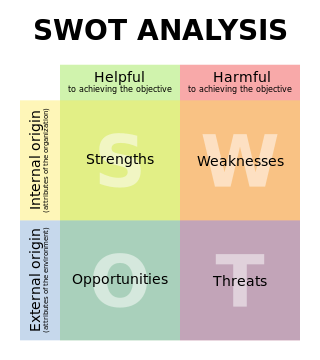
In business school, one of the first management skills you learn is how to do a SWOT analysis. SWOT stands for Strengths, Weaknesses, Opportunities, and Threats. The idea is that by identifying internal (S and W) and external (O and T) positives and negatives, you can then set realistic objectives for a project or business.

Management 101 - the SWOT analysis (Creative Commons license, created by Xhienne |Permission= {{cc-by-sa-2.5}})
Management 101 – the SWOT analysis (Creative Commons license, created by Xhienne |Permission= {{cc-by-sa-2.5}})

Predictably, I have an issue with the way a SWOT analysis frames the “harmful” aspects of the model. I’ve found that weaknesses (and sometimes threats) can be just as helpful in achieving an objective as strengths. If you see a weakness as an opportunity to adapt, compensate or innovate your way around a problem, then that weakness is going to be helpful in the long run.

For example, because of my weaknesses in executive function, I’ve created all sorts of organizational systems and fail safes that make me far more organized at work than the average person. Not because I love being organized but because if I wasn’t super organized I would spend my days going in circles, accomplishing little. Out of necessity, I’ve taken a weakness and turned it into a super-competency.

So ignore the word “Harmful” at the top of the righthand column in the SWOT graphic. Weaknesses are challenges to be conquered, not obstacles to shrink from in fear.  Continue reading Pros and Cons of Being Self-employed When You’re on the Spectrum

Monday Morning Musings (8/12)

Doing What I Want Experiment: Week 2

Realizations from week 2:

24/7 self-improvement doesn’t work, or at least it doesn’t work for me. I’ve given myself permission to fall back on old habits occasionally if I’m feeling too vulnerable or uncertain. More on this in a future post because it feels important.

Convenience should not be a major deciding factor for fun activities. Fun or rewarding activities are worth investing extra effort in.

Being open to spontaneity is part of good decision making. “But I always . . .” and “But I never . . .”  thoughts are not.

Being nice to myself is a valid reason for making a decision. I don’t need further justification.

For minor decisions, I don’t have to make the absolute best possible choice, I just have to make a choice I’ll be happy with. It doesn’t matter whether the Mai Tai will make me fractionally happier than the Margarita or I like the blue sweater slightly more than the red one. If I’ll be happy with either choice, I can choose on a whim and be done with it. I don’t have to try to be more happy or as happy as is humanly possible as the result of a decision. Buying a sweater is not the same as buying a car.  Continue reading Monday Morning Musings (8/12)

The Challenges of Being a Self-Employed Aspie

This is part 2 in a 4-part series on self-employment for people on the autism spectrum

——

Aspies are faced with some challenges that can make being self-employed very difficult. The two biggest potential roadblocks are issues with executive function and uneven social skills.

Executive function affects things like planning, initiation of actions, problem solving and attention switching. If you have poor executive function, the lack of accountability inherent in self-employment can be a recipe for disaster. I’ve developed a lot of systems to keep me on track and impose order on my work day–things like keeping lists, using a dayplanner, creating artificial deadlines, setting alarms, making notes to myself, and rewarding myself for meeting goals.

No matter what type of business you have (or what type of job you do), executive function is fundamental to staying on track on a day-to-day basis. If you can’t master the basics of managing a daily schedule and completing tasks on time, then being your own boss will probably make you more miserable than happy.

The other big challenge is social skills. While it’s possible to structure a business or freelance position so that you have very little contact with others, that isn’t always the case. Some common freelance/self-employed positions lend themselves to solitary work and others require a lot of contact with people.

For example, a website like Elance makes it possible for freelancers and small businesses to bid on and complete jobs entirely online. I’ve hired freelancers and gotten excellent work done without ever speaking with anyone over the phone or in person. If you’re skilled in a field that primarily requires creating deliverables (websites, graphics, text, analysis, code, etc.), you may be able to transact most of your business without a lot of face-to-face interaction (if you prefer).

On the other hand, turning your skill into a career may require you to interact with lot of people on a daily basis. If you’re an expert bicycle repair person, you’ll have to talk to people about their bikes to find out what work needs to be performed. But–oh–wait! I bet an someone with a special interest in bicycle repair would love nothing more than talking to people about repairing bicycles!

That’s another benefit to turning a special interest into a career. I find business-related interaction to be less stressful than general social interaction. If I’m talking to someone about a project then I’m in my element and can navigate the conversation fairly confidently. I’ve even been interviewed by writers for articles and books in my industry as an “expert” and actually enjoyed those opportunities. It was fun to talk about a subject I know well (even if the interviewers had to keep reminding me to slow down so they could understand me).  Continue reading The Challenges of Being a Self-Employed Aspie

The One Where I Talk to Myself About Shame

You’ve been putting off writing this for a while, haven’t you?

Yep.

Weeks?

More like months.

And how’s that working for you?

Well, I wrote posts about functioning and the verbal-nonverbal disconnect and executive function to avoid what I really wanted to write about.

Which is?

Shame. All the things I’m supposed to be able to do. The ways executive function undermines developmental expectations. What it means to be independent and what it means to be developmentally delayed and why those two things are not mutually exclusive.

Because I don’t live “independently.” I never have. I don’t know if I could or not. I probably could if I had to, though maybe not as successfully as I’d like to pretend.

You’re doing it again, veering into an easier topic to avoid that shame thing a little longer.

Right. Shame. Hang on.

shame

Hey, enough with the Googling! Get back here and write something.

Relax. I needed context. How about this:

Shame is rooted in our perceived defects. When those defects are revealed to others, we see ourselves in a negative light. Shame creeps in.  Continue reading The One Where I Talk to Myself About Shame

Monday Morning Musings (8/5)

Doing What I Want Experiment: Week 1

Some reflections from the first week of my “What do I want?” experiment:

The first two nights I dreamt about making decisions. My brain is  uber-serious about this experiment.

Side note: I’ve been having weird disturbing dreams all week. Not sure if that’s related to pushing myself out of my comfort zone with decision making or something else.

Decision making seems to be a multi-step process:

1. realize that a decision is required
2. sense my wants
3. align the wants with possible options for fulfilling them
4. choose among them based on convenience, preference, etc.

. . . okay, clearly more work is needed on the “just feel it” part of decision making

I made two big decisions:

The first was emotionally hard. I was proud of myself because I overrode my instinct to make the other person happy. It took a lot of effort but I felt accomplished when I decided to do what would be best and healthiest for me.

The second was a situation where I would normally have defaulted to making plans based on what the other person was doing, but I overrode that and thought about what I really wanted. The end result is I’m going to be doing something in the fall that I find a little scary but exciting.

I tried setting a 30-second time limit on minor decisions. Meh. I need a better strategy for minor decisions.

When a decision feels frightening, it might be because I don’t have enough information so I should ask for more details.

Funniest moment: The Scientist was rearranging the couch/hassock for TV watching and asked where I like to sit. I replied “however you like it is fine—no, no, wait, wait, in the hole” which he magically understood as “I like to sink into the crack between the cushions so put the hassock where I can do that and still put my feet up comfortably.” The magic of being married forever. Also, look at how I caught myself defaulting to his preference and changed strategies – yay!

Key realization: I’m an adult. I can decide how to use my time. If I’m bored, I can actively choose to do something else. This probably sounds stupid but I’m throwing it out there because it was a revelation to me.  Continue reading Monday Morning Musings (8/5)

Procrastination or Executive Function Fail?

There’s a spot on my kitchen floor, a little cluster of dried reddish drips. I don’t know what it is. If it’s from 3 days ago, it’s tomato sauce. If it’s been there longer . . .  who knows.

I’ve walked past it dozens of times. I look at it. It annoys me. I wonder how it got there. I wish it would go away. It doesn’t occur to me that I can make that happen.

The greasy smudgey fingerprints on the cabinet that I can only see in exactly the right light? The 8-inch long thread that’s been hanging off the bathroom rug since the last vacuuming? The dryer sheet on the laundry room floor? Same thing.

What is this? Why can I sit here and catalog all of these little annoyances yet I still do nothing about them? It’s not like fixing them would take a huge amount of time or effort.

In fact, to demonstrate how minor they are, I’ll take care of them right now.

.

.

.

.

.

Done. It took me less than five minutes to wipe down the kitchen cabinets, trim the thread and toss in the trash, pick up the dryer sheet, and clean the spot off the floor. I bet it would also take only a few minutes to vacuum up the bits of dirt and grass scattered in the entryway from my running shoes.

But I’m sitting writing and not doing it, aren’t I?

Maybe later.

And this is how days go by and I keep right on walking around the mess, getting more and more annoyed by its existence yet still not doing anything about it.  Continue reading Procrastination or Executive Function Fail?

The Self-Employed Aspie

This is the first in a 4-part series on self-employment for people on the autism spectrum

Part 1: The Self-Employed Aspie

The majority of people with Asperger’s are either unemployed or underemployed. For an adult aspie, this is a scary statistic. It’s easy to hear it and feel like the deck is stacked against you.

In some ways it is. A job interview is heavily weighted in favor of social skills. Employees are generally expected to be team players. Often, getting ahead in the workplace is as much a matter of who you know as what you know. All jobs have rules, both written and unwritten, and employees are expected to follow them.

So much of what happens in a workplace is second nature to neurotypicals and a complete mystery to the average aspie.

Or at least I assume it is. My last workplace was a McDonald’s. I was eighteen.The expectations were low. As long as you didn’t steal from your register or hold the place up at gunpoint they didn’t fire you. I’m not exaggerating. Those were the only two things people were fired for in the year that I worked there.

So if you’re looking for advice about getting or keeping a traditional job–with or without Asperger’s–I can’t help you.

But if you’re curious about being self-employed, I have a lot of experience. I’ve been the owner or co-owner of a business since I was 19. I lucked into the first business–it was something my husband started around the time we got married. It made sense for me to help him out rather than going out and getting a job.  Continue reading The Self-Employed Aspie

What Do I Want?

The Scientist has proposed a 30-day experiment. He says I need to practice doing what I want to do. He says, in addition to being good for me, it will help him to get to know me better. We’ve known each other for 28 years, so this feels a little late in the game for getting to know each other better. And yet . . .

What really intrigued me about his proposal is how it might help me get to know myself better. If you’re a long time reader, you might remember that last year I wrote about how much difficulty I have figuring out what I want. I often haphazardly make minor decisions, only to find I’m unhappy with the results. Here’s an example, the one that sparked the idea for the experiment:

I tried out a new recipe for dinner last week–a light summer mix of fresh tomatoes, red onions, squash and fried okra from the farmer’s market. When The Scientist tasted it, he said the flavor was too strong for him but he’d make some pasta to toss the veggies with. Since I was already cooking, I made the pasta, and for some reason I mixed all of the veggies with the pasta instead of setting my half aside. The resulting pasta dish tasted okay, but it wasn’t what I had in mind when I chose the recipe.

After dinner I was feeling gloomy, silently perseverating. As we were sitting down to watch TV, I blurted out, “I have no idea why I ate that. It wasn’t what I wanted.”

The Scientist, surprised by how upset I was, asked why I ate it if I didn’t want it. My answer: “I don’t know.”

A longish discussion ensued. The next day. Because we’re slow to process things. One of the conclusions we came to is that I sometimes do things to please other people at the expense of own preferences. Strangely, this seems to be more of a reflex action than a conscious choice.

So the experiment is this: for 30 days, I’m supposed to do whatever I want. This is alarmingly vague.

What do I want? Decision making–even the simplest decisions–can tie me up in knots. My primary decision-making strategies:

1. What do you want? I’ve noticed that other people often have stronger preferences or are more aware of what they want or like than I am. If what they suggest isn’t objectionable to me, I’ll go along with their choice. Decision making by proxy. Simple. Efficient. And probably one of the main reasons I have so much trouble figuring out my own wants and preferences.

2. I don’t want A. By default I must want B. If someone says “do you want Chinese food or Pizza?” it rarely occurs to me that I actually want a burger.

3. This is too hard. I give up. When there are too many options, I don’t know where to start. I choose the first option that isn’t terrible. These are often the choices I end up feeling most ambivalent about.

4. I want A but it’s too much work. I’ll just settle for B. This is how I made decisions when I’m overloaded. I would love ice cream right now but going out to get it sounds exhausting so I’ll have this peach instead.

5. I want this thing and nothing else. This sounds great. It’s not. What I want is often imaginary. In my head it’s this perfect thing. In reality, it turns out to be a pale shadow of what I anticipated.

6. I want A, but I can tell you want B. If one of us has to be disappointed, I’d rather it be me. This makes me sound like such a martyr. Honestly,  it’s an annoying reflex response that I need to cure myself of. Done too often, it breeds resentment.

Writing this out helps me understand better why I often feel ambivalent or unsatisfied with minor decisions. I need new strategies. The Scientist says to try just feeling it. This is hard. I’m used to making decisions based on logic and reasoning.

But . . . 30 days of being with this question of “what do I want?” might change that. We’ll see.

Stop Signs For Tommy

Hi Tommy,

Your mom told me that you like stop signs a lot. When I was your age, I really liked old coins and when I got a little older, I really liked baseball cards and now that I’m grown up, one of the things I like a lot is old buildings that people don’t use anymore. I especially like looking at pictures of old buildings and I spend a lot of time searching online for them.

So when your mom said you like to look for stop sign pictures, I thought it would be fun to ask my friends who read my blog to take some stop sign pictures for you. They asked their friends and a whole bunch of people went out and took photos of stop signs all over the world just for you.

We hope that you like them!

Cynthia

P.S. If you click on the photos, some of them have bigger versions and you’ll be able to see the stop signs better.
P.P.S. Some people took a bunch of photos so I put one here and linked to the others. Go have a look!

Continue reading Stop Signs For Tommy